

This article examines the key differences between Solar POE switch factories and trading companies, focusing on factors such as quality control, customization, pricing, lead time, technical support, intellectual property, and scalability. It emphasizes that factories, like Shenzhen Ficotek Photonics Co., Ltd. (FICOTEK), offer direct control over manufacturing processes, enabling rigorous reliability testing, OEM/ODM services, and innovative features such as industrial-grade temperature resistance and outdoor lightning protection. In contrast, trading companies act as intermediaries, providing broader product variety and lower minimum order quantities but limited technical support and customization. The article highlights FICOTEK’s capabilities, including complete in-house R&D across the optical communication chain, patents, and a strong after-sales policy of one-year replacement, three-year warranty, and lifetime support. It concludes that for mission-critical industrial applications requiring high reliability and long-term partnership, sourcing directly from a factory is advantageous, while trading companies suit small or exploratory purchases. Ultimately, buyers should assess their project requirements to choose the optimal supply channel.
When sourcing Solar POE (Power over Ethernet) switches for industrial applications such as solar energy systems, security surveillance, or telecommunications, buyers often face a critical decision: should they purchase directly from a factory or through a trading company? This choice can significantly impact product quality, customization, pricing, and long-term support. Understanding the fundamental differences is essential for making an informed procurement strategy. This article explores the key distinctions between Solar POE switch factories and trading companies, highlighting the advantages and potential drawbacks of each. We will also examine a real-world example from Shenzhen Ficotek Photonics Co., Ltd. (FICOTEK), a factory with comprehensive capabilities spanning from optical components to industrial switches, to illustrate the benefits of choosing a manufacturer over a intermediary.
Understanding the Supply Chain for Solar POE Switches
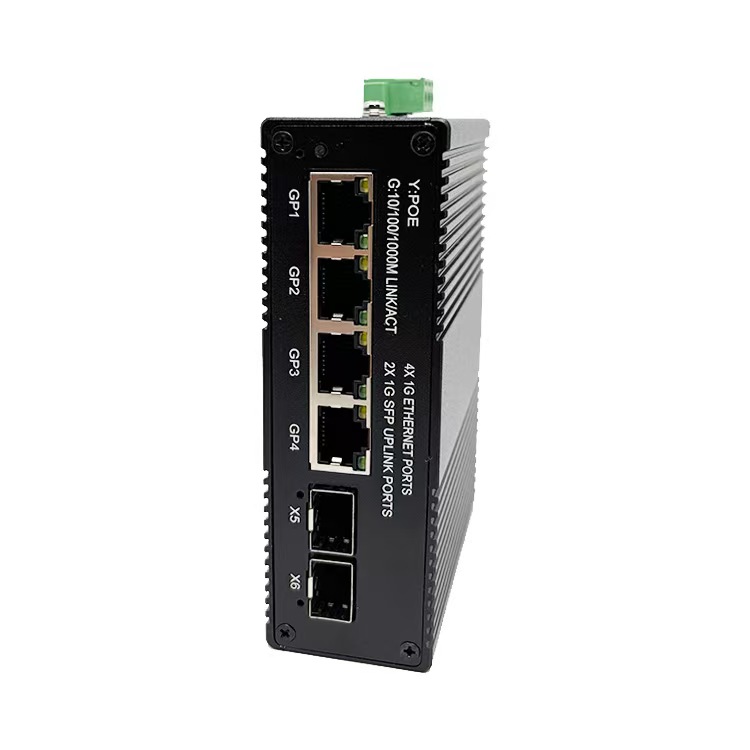
Solar POE switches are specialized network switches designed to transmit both data and power over Ethernet cables to devices like IP cameras, wireless access points, and sensors, often in harsh outdoor or industrial environments. They require robust design, including industrial-grade temperature resistance, outdoor lightning protection, and advanced network management features. The supply chain for these switches involves several stages: component sourcing (optical transceivers, chips, power modules), PCB assembly, firmware development, testing, and final integration. Factories own and operate the production facilities, controlling every stage from design to shipping. Trading companies, on the other hand, act as intermediaries, sourcing products from multiple factories and reselling them to end customers. While they may offer a broader catalog, they lack direct control over manufacturing processes, quality assurance, and technical innovation.
undefined
What is a Solar POE Switch Factory?
A Solar POE switch factory is a manufacturing entity that designs, develops, and produces its own line of switches. It typically has in-house R&D teams, production lines, testing labs, and after-sales service. Factories invest in specialized equipment for SMT (Surface-Mount Technology), optical component assembly, and environmental testing. They often hold patents and intellectual property (IP) for their designs. For example, FICOTEK boasts complete R&D and production capabilities spanning the entire industry chain, from optical components (TOSA, ROSA, BOSA) to Optical Modules, Media Converters, and Industrial-grade Switches. The company has invention patents and utility model patents, indicating a commitment to innovation. Factories can offer OEM (Original Equipment Manufacturing) and ODM (Original Design Manufacturing) services, allowing customers to customize products with their own branding or unique specifications. Moreover, factories can scale production according to demand, benefiting from economies of scale to reduce per-unit costs for large orders.
What is a Trading Company?
A trading company, also known as a distributor or reseller, sources products from various factories and sells them to buyers. Trading companies often have strong marketing networks, multilingual sales teams, and the ability to handle small orders or provide samples quickly. They can aggregate products from different manufacturers, offering a wider variety of switches with different features and price points. However, trading companies do not own the production facilities; they rely on factories to manufacture and deliver. This introduces risks: quality control depends on the factory’s standards, customization options are limited to what the factory already offers, and technical support may be restricted to pre-sales information. Trading companies typically have shorter warranty periods and may charge higher prices to cover their margins. For critical applications like solar power stations or high-speed rail, where reliability is paramount, the lack of direct control can be a significant disadvantage.
Key Differences at a Glance
| Aspect | Factory | Trading Company |
|---|---|---|
| Quality Control | Direct, rigorous testing | Indirect, depends on supplier |
| Customization | OEM/ODM, IP rights | Limited to stock products |
| Price | Lower for bulk, no middleman | Higher per unit but lower MOQ |
| Lead Time | Controllable production schedule | Variable, dependent on factory |
| Technical Support | In-house engineers, lifetime support | Often limited to sales support |
| Warranty | Longer (e.g., 3-year) | Shorter (e.g., 1-year) |
| Innovation | R&D patents, continuous improvement | No IP, follows market trends |
Detailed Comparison
1. Quality Control and Reliability
Factories implement comprehensive quality management systems, including incoming material inspection, in-process testing, and final product validation. For instance, FICOTEK states that any product launched to the market has undergone rigorous reliability verification. They have complete R&D and production equipment and product testing instruments. In contrast, trading companies rely on the factory’s quality assurance, which may vary between suppliers. A factory can trace issues back to specific production batches and implement corrective actions immediately, while a trading company may have to coordinate with multiple factories, delaying resolution.
2. Customization and OEM/ODM Services
One of the strongest advantages of working with a factory is the ability to customize products. FICOTEK, for example, can provide customized products with independent intellectual property rights according to customer requirements. They accept OEM and ODM orders, meaning clients can have switches with their own brand, specific firmware features, or mechanical modifications. Trading companies, however, typically only sell off-the-shelf products. If a buyer needs a particular VLAN configuration, special power budget, or unique enclosure design, a factory can accommodate; a trading company cannot.
3. Price and Value for Money
Direct factory pricing eliminates intermediary margins, making per-unit costs lower for large quantities. However, factories often require minimum order quantities (MOQs) due to setup and material costs. Trading companies can offer lower MOQs but at a higher unit price. For project-based procurement with specific requirements, the total cost of ownership (including support) often favors factories. Moreover, factories may offer better value through bundled services like custom packaging, labeling, or technical documentation.
4. Lead Time and Supply Chain Stability
Factories control their production schedules and can prioritize orders based on customer agreements. They can also maintain safety stocks to ensure timely delivery. Trading companies must rely on the factory’s lead time plus additional handling and shipping. During periods of high demand or component shortages, trading companies may experience longer delays. FICOTEK, with its own factory and growing production capacity, can adjust output to meet customer needs, offering stable lead times.
5. Technical Support and After-Sales Service
Factories like FICOTEK provide comprehensive after-sales services, including a “one-year replacement, three-year warranty, and lifetime technical support”. This means that for the lifespan of the product, customers have access to engineering expertise for troubleshooting, firmware updates, and configuration guidance. Trading companies often have limited technical staff and may only offer limited support during the warranty period. For mission-critical applications such as wind power generation or energy storage, direct access to the product’s design team is invaluable.
6. Intellectual Property and Innovation
Factories invest in R&D to create unique features that differentiate their products. FICOTEK holds invention patents and utility model patents, indicating a strong commitment to innovation. Their products feature lightweight network management with VLAN, QoS, RSTP, ERPS, SNMP, POE control, link aggregation, and lower power consumption. Trading companies typically sell generic products without proprietary technology, which may become obsolete quickly or lack the latest performance enhancements.
7. Scalability and Capacity
Factories can scale their production lines to handle large volume orders, especially when they experience continuous growth in factory size and number of employees. FICOTEK’s production capacity increases with its expanding workforce and facilities. Trading companies, being intermediaries, cannot easily scale their supply; they are limited by their suppliers’ capacity. For customers expecting long-term relationships and growing order volumes, a factory partner is better positioned to grow together.
Case Study: Shenzhen Ficotek Photonics Co., Ltd.
Shenzhen Ficotek Photonics Co., Ltd. (abbreviated as FICOTEK) is a prime example of a factory that has built a strong reputation in the optical communication and industrial switch market. The company adheres to a business philosophy of efficient innovation and people-oriented management. Among its management personnel, there are rich experience in enterprise management and management talents who have been engaged in the development and market expansion of optoelectronic and optical communication products for many years. Additionally, the company has absorbed a group of experienced production and process technology engineers, providing strong technical support for the company’s products.
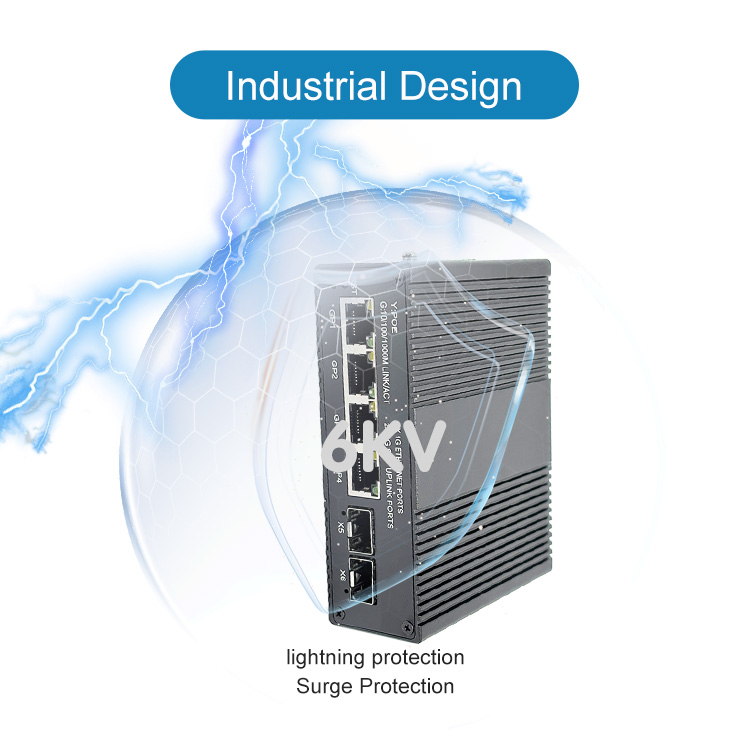
FICOTEK has its own factory, and with the continuous growth of factory size and number of employees, the factory’s production capacity continues to increase. This scale allows them to provide customized products with independent intellectual property rights according to customer requirements. They can offer OEM and ODM services, and all customers enjoy after-sales service of “one-year replacement, three-year warranty, and lifetime technical support”. Their products feature industrial-grade temperature resistance and outdoor lightning protection capabilities. With lightweight network management, they offer VLAN, QoS, RSTP, ERPS, SNMP, POE control, link aggregation, and lower power consumption. They are widely used in industries such as petroleum, energy storage, high-speed rail, wind power generation, and security.
FICOTEK has complete R&D and production equipment and product testing instruments, with complete R&D and production capabilities throughout the entire industry chain from optical components to TOSA ROSA BOSA, to Optical Modules, to Media Converter, to Industrial-grade Switches. They can provide various types of products according to different customer needs and customize various products according to customer requirements. Any product launched by FICOTEK to the market has undergone rigorous reliability verification. They also hold invention patents and utility model patents, demonstrating a strong focus on intellectual property.
How to Choose Between a Factory and a Trading Company
Selecting the right partner depends on your specific needs. If you require large volumes, customized features, long-term technical support, and direct communication with engineers, a factory like FICOTEK is the optimal choice. Factories are ideal for projects with strict quality standards, such as oil & gas, high-speed rail, or security systems. On the other hand, if you need a small quantity of standard products for evaluation, prototyping, or a one-time project, a trading company may offer convenience and lower upfront commitment. However, for any deployment where reliability is critical, investing in a factory partnership yields better long-term value.
Conclusion
The decision between a Solar POE switch factory and a trading company boils down to trade-offs: control versus flexibility, cost versus minimum order quantity, and depth of support versus breadth of product range. Factories provide superior quality management, customization, innovation, and after-sales service, as exemplified by FICOTEK’s comprehensive capabilities. Trading companies can serve as a bridge for small buyers or those needing quick access to multiple brands. For industrial solar applications where network availability is paramount, sourcing directly from a factory ensures that the switches are built to withstand harsh environments and backed by the original manufacturer. As the market for solar energy and industrial IoT expands, understanding these differences will empower buyers to make choices that enhance system performance and reduce total cost of ownership.