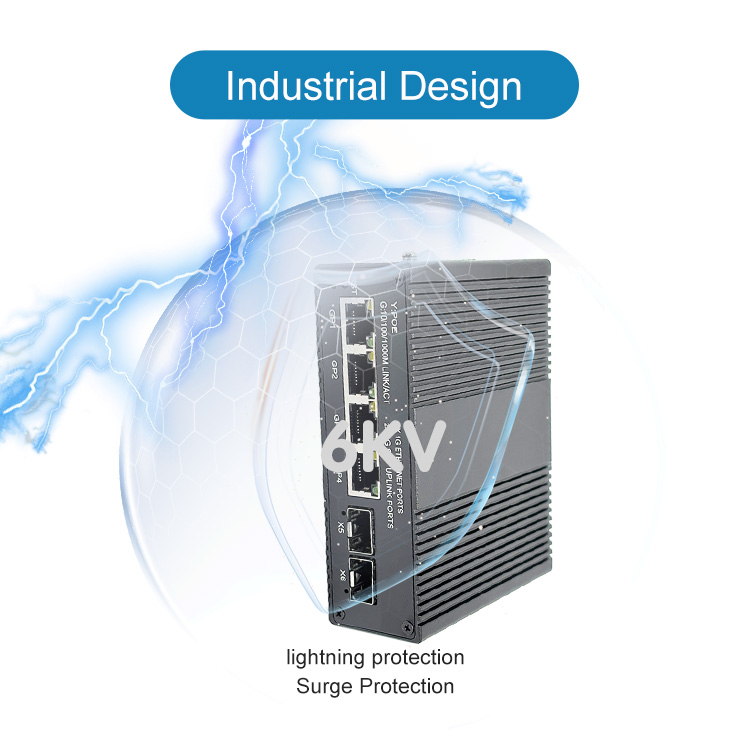
The testing lab in a Solar POE switch factory is critical for ensuring product reliability due to the harsh operating environments these devices face. Solar installations expose switches to extreme temperatures, lightning strikes, and continuous operation. A dedicated lab simulates these conditions through tests such as temperature cycling, surge protection, and vibration. Shenzhen Ficotek Photonics Co., Ltd (FICOTEK) exemplifies this approach with its comprehensive testing facility. FICOTEK’s lab validates industrial-grade temperature resistance (-40°C to +85°C), lightning protection up to ±6kV, and management features like VLAN, QoS, and RSTP. The company’s vertical integration—from optical components (TOSA, ROSA, BOSA) to finished switches—allows real-time design optimization. Patents and rigorous testing ensure customized products meet high standards. FICOTEK offers OEM/ODM services with a one-year replacement, three-year warranty, and lifetime technical support. The lab also drives continuous improvement by analyzing failures to enhance designs. Ultimately, a robust testing lab guarantees that switches perform reliably in petroleum, energy storage, high-speed rail, wind power, and security applications, making it indispensable for any manufacturer committed to quality.
In the rapidly evolving landscape of industrial networking, the demand for robust and reliable Power over Ethernet (POE) switches has never been higher, especially in solar energy applications. These switches must withstand extreme temperatures, lightning strikes, and continuous operation in remote outdoor environments. The cornerstone of delivering such trustworthy products lies in a comprehensive testing lab within the factory. This article explores why a dedicated testing lab is indispensable for product reliability, using the example of Shenzhen Ficotek Photonics Co., Ltd (FICOTEK), a leading manufacturer in the field.
The Harsh Realities of Solar Installations
Solar farms are often located in deserts, mountains, or coastal areas where temperatures can range from -40°C to 85°C. Additionally, these sites are prone to lightning strikes and power surges. A POE switch deployed in such an environment must maintain uninterrupted data and power transmission for surveillance cameras, monitoring systems, and control networks. Any failure can lead to costly downtime or even safety hazards. Therefore, reliability is not a luxury but a necessity.
Testing Lab: The Heart of Quality Assurance
A testing lab simulates the real-world conditions that a product will face. At FICOTEK, the testing lab is equipped with advanced instruments to perform rigorous reliability verification. Every product launched to the market undergoes a series of tests including temperature cycling, humidity, vibration, and lightning surge protection. This ensures that the switches can operate flawlessly under the most challenging circumstances.
undefined
Temperature and Environmental Testing
Industrial-grade temperature resistance is a key feature of FICOTEK’s POE switches. The testing lab houses environmental chambers that can replicate extreme heat and cold. Switches are subjected to accelerated aging tests, thermal shock tests, and long-term stability tests. These procedures guarantee that the switches maintain performance from desert heat to arctic cold.
Lightning and Surge Protection
Outdoor installations demand robust lightning protection. FICOTEK’s lab includes surge generators that simulate lightning strikes with voltages up to 6kV. The switches are tested for both differential and common mode surges. Passing these tests ensures that the product’s built-in protection circuits can divert harmful surges away from sensitive components, preventing damage and data loss.
Complete In-House Capabilities
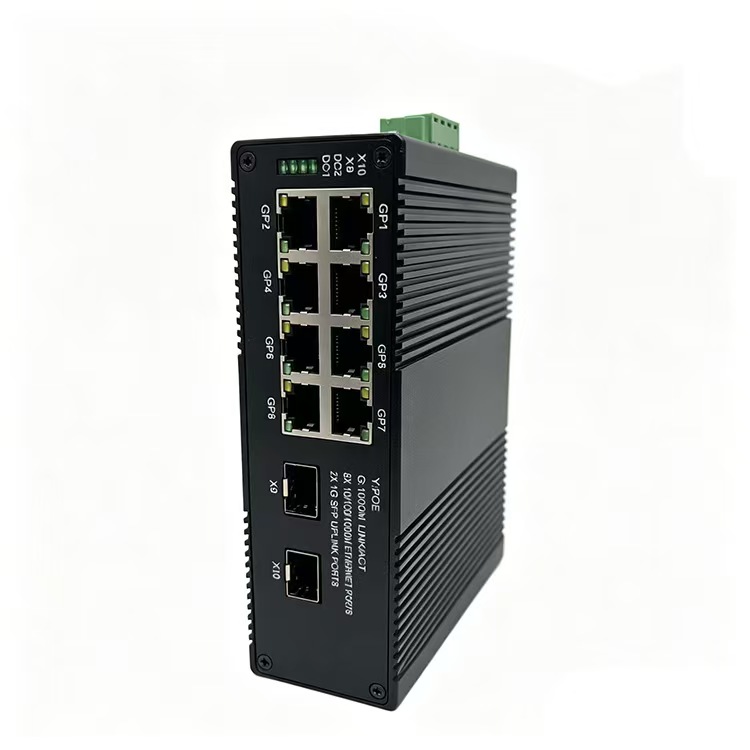
FICOTEK boasts a full vertical integration from optical components to finished industrial switches. The company’s factory has complete R&D and production equipment, including TOSA, ROSA, BOSA assembly lines, optical module testers, and media converter test racks. This end-to-end control allows for immediate feedback and optimization of designs based on test results. Any product launched by FICOTEK to the market has undergone rigorous reliability verification.
Product Features Validated by Testing
The testing lab verifies key features such as lightweight network management (VLAN, QoS, RSTP, ERPS, SNMP), POE control, link aggregation, and low power consumption. These features are essential for smart grid, energy storage, high-speed rail, wind power, and security applications. By testing each functionality under load and stress, FICOTEK ensures that the switches deliver consistent performance.
Table: Typical Testing Parameters
| Test Item | Standard | FICOTEK Specification |
|---|---|---|
| Operating Temperature | IEC 60068-2-14 | -40°C to +85°C |
| Lightning Surge | IEC 61000-4-5 | ±6kV contact, ±8kV air |
| Humidity | IEC 60068-2-78 | 95% RH at 55°C |
| Vibration | IEC 60068-2-6 | 10-500Hz, 5g |
Innovation and Intellectual Property
FICOTEK’s commitment to innovation is reflected in its invention patents and utility model patents. The testing lab plays a pivotal role in patent development by providing empirical data to validate new technologies. For example, proprietary circuit designs for POE power management are tested to optimize efficiency and protection.
Customization and OEM/ODM Services
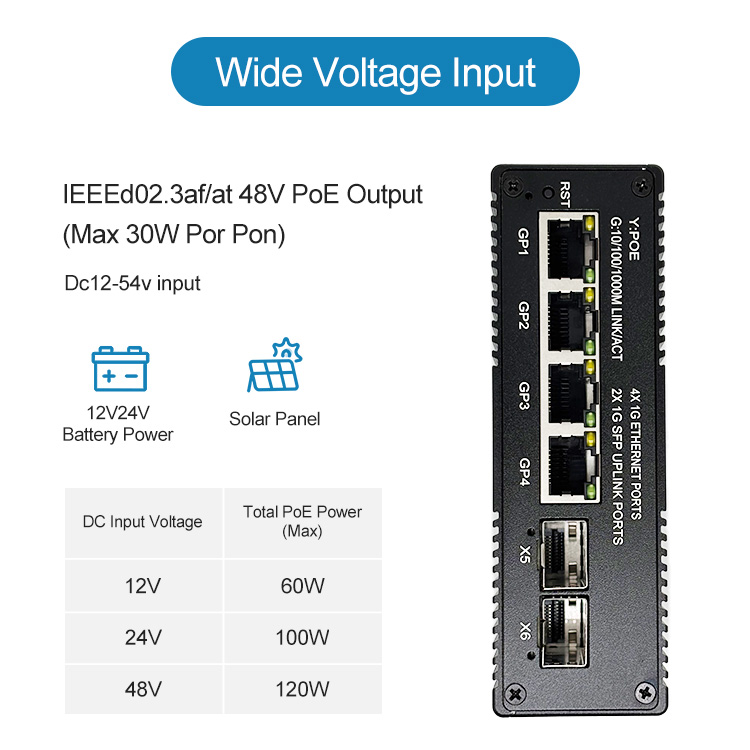
With a strong testing foundation, FICOTEK can offer customized products with independent intellectual property rights. The company provides OEM and ODM services, and all customers enjoy after-sales service of “one-year replacement, three-year warranty, and lifetime technical support.” The testing lab ensures that custom designs meet the same high reliability standards as standard products.
Beyond Testing: Continuous Improvement
The testing lab is not just a gatekeeper but also a source of data for continuous improvement. Engineers analyze test failures to refine designs and manufacturing processes. This feedback loop has enabled FICOTEK to achieve low failure rates in the field, even in demanding applications like petroleum, energy storage, high-speed rail, and wind power generation.
Conclusion
In the competitive world of industrial networking, a solar POE switch factory’s testing lab is the unsung hero behind product reliability. It provides the assurance that switches will perform in the harshest conditions, protecting critical infrastructure. FICOTEK’s investment in a comprehensive testing lab, combined with its full industry chain capabilities, positions it as a trusted partner for customers worldwide. As the demand for reliable connectivity grows, the testing lab will remain a critical asset for any manufacturer committed to quality.
For those interested in seeing reliability in action, FICOTEK welcomes visitors to its factory. With complete R&D and production equipment, the company demonstrates its dedication to excellence. From optical components to industrial switches, every product is a testament to the power of rigorous testing.