

Shenzhen Ficotek Photonics Co., Ltd. (FICOTEK) is a manufacturer of solar PoE switches that successfully adapts to various regional standards through efficient innovation, a people-oriented philosophy, and comprehensive R&D capabilities. The factory’s vertically integrated production—from optical components to industrial switches—enables rapid customization and compliance with safety, EMC, and environmental regulations in North America, Europe, Asia, and other markets. By offering OEM and ODM services, FICOTEK provides customized products with independent intellectual property, backed by a one-year replacement, three-year warranty, and lifetime technical support. Key product features include industrial temperature resistance, outdoor lightning protection, lightweight network management (VLAN, QoS, RSTP, ERPS, SNMP, PoE control, link aggregation), and lower power consumption. These switches find applications in petroleum, energy storage, high-speed rail, wind power, and security industries. The factory’s rigorous reliability verification and strong patent portfolio ensure that every product meets or exceeds global standards. Welcome friends from all walks of life to visit and provide guidance.
In the rapidly evolving world of networking and renewable energy, Power over Ethernet (PoE) switches have become a cornerstone for efficient data and power transmission. Among these, solar-powered PoE switches are gaining traction due to their ability to operate in remote, off-grid locations while supporting devices such as IP cameras, wireless access points, and sensors. However, manufacturing a solar PoE switch that meets the diverse regulatory and technical requirements across different regions is a complex challenge. This article explores how a leading manufacturer, Shenzhen Ficotek Photonics Co., Ltd. (FICOTEK), navigates these variations through innovation, rigorous testing, and customer-centric customization.
Understanding Solar POE Switches and Their Applications
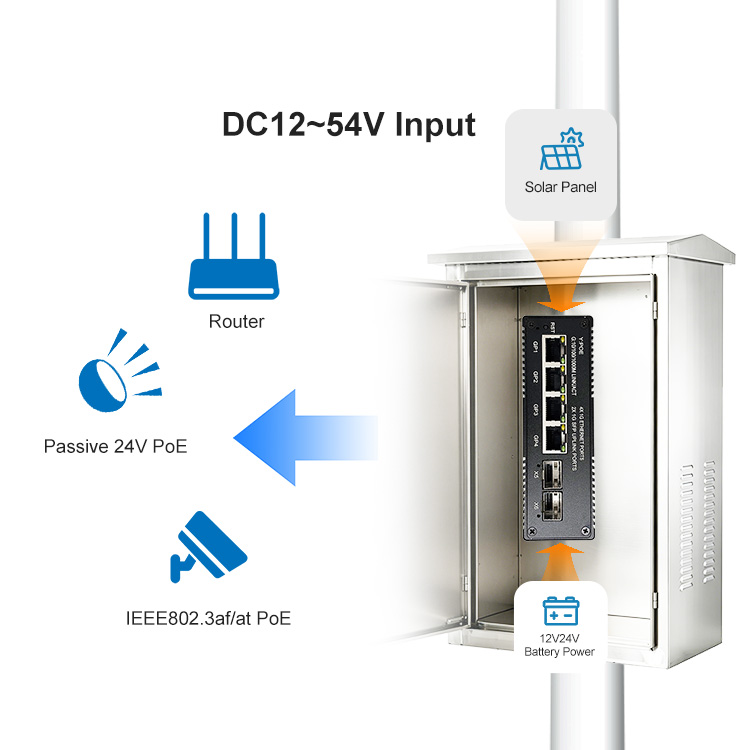
A solar PoE switch integrates photovoltaic charging capabilities with standard PoE switching functionality. It typically includes a solar charge controller, battery management, and an industrial-grade switch that supports PoE standards such as IEEE 802.3af, 802.3at, and 802.3bt. These devices are deployed in harsh environments—from solar farms and oil fields to high-speed rail systems and wind power stations. Their key features include industrial temperature resistance (-40°C to 85°C), outdoor lightning protection, and lightweight network management protocols like VLAN, QoS, RSTP, ERPS, SNMP, and link aggregation. Lower power consumption is another critical advantage, making them ideal for sustainable infrastructure.
The Challenge of Regional Standards
Each region imposes distinct standards for electrical safety, electromagnetic compatibility (EMC), environmental resistance, and communication protocols. For example, North America requires UL listing and FCC Part 15 compliance, while Europe demands CE marking (including LVD and EMC directives) and often RoHS/WEEE. In Asia, certifications like China’s CCC, Japan’s VCCI, or Korea’s KC are mandatory. Additionally, specific industries may have unique requirements: the oil and gas sector may require ATEX or IECEx explosion-proof certification, while railway applications demand EN 50155 compliance. A solar PoE switch factory must adapt its design, components, and testing procedures to satisfy these diverse mandates.
FICOTEK’s Approach: Efficient Innovation and People-Oriented Philosophy
FICOTEK, based in Shenzhen, operates with a business philosophy of efficient innovation and being people-oriented. The company’s management team includes veterans with decades of experience in optoelectronic and optical communication product development and market expansion. They have also assembled a group of experienced production and process engineers who provide strong technical support. This expertise enables FICOTEK to rapidly adjust to changing standards while maintaining high quality. The company holds invention patents and utility model patents, demonstrating its commitment to intellectual property and innovation.
Comprehensive R&D and Production Capabilities
FICOTEK boasts complete R&D and production equipment, including product testing instruments that span the entire value chain—from optical components (TOSA, ROSA, BOSA) to optical modules, media converters, and industrial-grade switches. This vertical integration allows the factory to control quality at every stage and quickly implement region-specific modifications. For instance, if a European customer requires reinforced insulation and lower standby power, FICOTEK can adjust the power supply design and component selection without relying on external suppliers. The factory’s growing size and workforce have continuously increased production capacity, enabling it to handle large orders while maintaining flexibility.
Customization and Compliance Testing
Every product launched by FICOTEK undergoes rigorous reliability verification. To adapt to regional standards, the factory employs a multi-step process:
- Requirements Analysis: The team reviews the target market’s regulations, including safety, EMC, environmental, and performance standards.
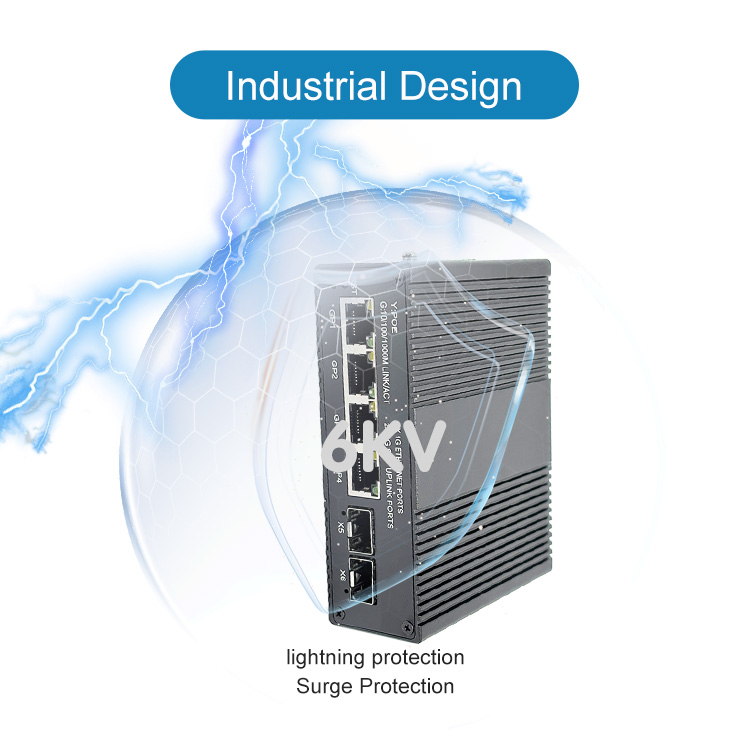
- Design Adaptation: Engineers modify the switch’s circuitry, enclosure, software, and firmware to meet specific requirements. For example, for outdoor use in regions with high lightning activity, enhanced surge protection (up to 6kV) is integrated. For industrial applications, conformal coating and IP67-rated housings are used.
- Testing and Certification: In-house testing with calibrated equipment (such as network analyzers, thermal chambers, and surge generators) is performed. Samples are then sent to accredited labs for formal certification (e.g., UL, CE, FCC). FICOTEK also conducts pre-compliance checks to reduce time and cost.
- Documentation: Technical files, user manuals, and declarations of conformity are prepared in multiple languages to support market entry.
For OEM and ODM customers, FICOTEK provides customized products with independent intellectual property rights. This includes adding custom branding, configuring specific software features, or altering form factors. The factory’s after-sales service—’one-year replacement, three-year warranty, and lifetime technical support’—ensures ongoing compliance support even after deployment.
Product Features That Span Regions
FICOTEK’s solar PoE switches include features that are universally valuable but can be tailored:
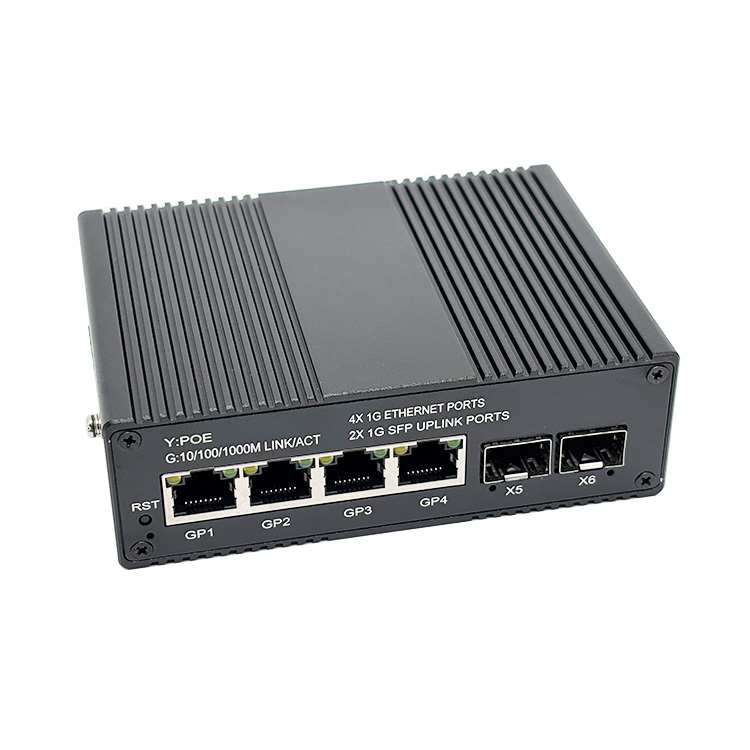
- Industrial-grade temperature resistance (-40°C to 85°C)
- Outdoor lightning protection (IEC 61000-4-5)
- Lightweight network management: VLAN, QoS, RSTP, ERPS, SNMP, PoE control, link aggregation
- Lower power consumption through efficient DC-DC converters and energy-saving modes
- Wide input voltage range (12-58VDC) to accommodate various solar panel outputs
These features are widely applied in petroleum, energy storage, high-speed rail, wind power generation, and security industries. By leveraging a modular design approach, FICOTEK can swap components (e.g., optocouplers, transformers, connectors) to comply with different regional standards without redesigning the entire product.
Case Study: Adapting for European vs. North American Markets
Consider a typical scenario: FICOTEK receives an order for solar PoE switches from a European utility company and a North American telecom provider. The European client requires CE marking with EN 55032 (EMC) and EN 62368-1 (safety), plus RoHS compliance. The North American client needs UL 62368-1 and FCC Part 15. Additionally, the European version must use a Schuko AC input (while the switch also has DC input), whereas the North American version uses an NEMA connector. FICOTEK designs a common PCB layout but uses different power supply modules and connectors. The firmware is adjusted to support region-specific PoE power budgets (e.g., 30W per port in North America vs. 25W in some European countries). After in-house testing, the two variants are sent to respective labs. The factory’s experience with global certifications allows it to anticipate issues—such as the need for additional filtering in the European version to meet conducted emissions limits.
Testing and Reliability Verification
FICOTEK’s dedication to quality is evident in its testing infrastructure. The factory has complete R&D and production equipment and product testing instruments. For solar PoE switches, key tests include:
- Temperature cycling: -40°C to 85°C for 1000 hours
- Humidity and salt fog (for coastal installations)
- Electrical surge and ESD (up to 8kV contact discharge)
- Vibration and shock (for transportation and harsh environments)
- EMC pre-scanning (using spectrum analyzers and LISN)
These tests ensure that products meet or exceed standards like IEC 60068-2-x, IEC 61000-x, and others. Any product launched by FICOTEK to the market has undergone rigorous reliability verification. The company welcomes friends from all walks of life to visit and provide guidance.
Future Trends and Continuous Improvement
As global standards evolve (e.g., IEEE 802.3bt Type 4 delivering 90W, or new energy efficiency requirements), FICOTEK stays ahead through continuous R&D. The factory’s people-oriented philosophy drives it to invest in employee training and advanced equipment. With a strong patent portfolio, FICOTEK is well-positioned to offer innovative solutions that meet both current and future regional standards. Whether it’s supporting higher power, integrating IoT protocols, or achieving environmental certifications, the factory’s adaptive approach ensures reliable, compliant solar PoE switches for customers worldwide.
Conclusion
Adapting to different regional standards is a multifaceted task that requires deep technical expertise, a flexible production process, and a commitment to quality. Shenzhen Ficotek Photonics Co., Ltd. demonstrates how a solar PoE switch factory can successfully navigate this landscape through efficient innovation, a people-oriented culture, full-spectrum R&D capabilities, and robust after-sales support. By offering OEM and ODM services, customizable products with independent IP, and strong reliability verification, FICOTEK ensures that its solar PoE switches perform seamlessly across diverse markets—from petroleum fields in the Middle East to high-speed rail systems in Europe. As the demand for renewable-energy networking grows, such adaptive manufacturing will be key to global connectivity.