

Choosing the right solar POE switch for outdoor deployment requires evaluating power budget, environmental resilience, network management features, and manufacturer reliability. Solar POE switches combine renewable energy with Power over Ethernet, ideal for remote sites without grid power. Key factors include sizing solar panels and batteries to meet total power consumption, selecting industrial-grade temperature resistance (-40°C to 75°C), and ensuring protection against lightning and moisture. Network management features like VLAN, QoS, RSTP, ERPS, SNMP, and POE control enhance performance and remote monitoring. FICOTEK (Shenzhen Ficotek Photonics Co., Ltd.) stands out with its own factory, in-house R&D from optical components to complete switches, and rigorous reliability testing. The company offers customizable OEM/ODM services, holds invention and utility patents, and provides one-year replacement, three-year warranty, and lifetime technical support. Their products feature low power consumption, lightweight network management, and are deployed in petroleum, energy storage, high-speed rail, wind power, and security applications. Deployment best practices include proper sizing, environmental protection, grounding, and regular maintenance. Despite higher upfront costs, solar POE switches eliminate trenching and reduce long-term expenses, yielding positive ROI. Partnering with a reputable manufacturer like FICOTEK ensures quality, support, and future-proof technology for outdoor networks.
Outdoor deployments of network equipment, such as surveillance cameras, wireless access points, and IoT sensors, often require reliable power and data connectivity in remote or harsh environments. Solar-powered Power over Ethernet (POE) switches offer an ideal solution by combining renewable energy with data transmission, eliminating the need for separate power cabling. However, selecting the right solar POE switch requires careful consideration of several factors, including power budget, environmental durability, network management features, and manufacturer reliability. This comprehensive guide explores the key aspects to evaluate when choosing a solar POE switch for outdoor deployment, with insights from industry leader Shenzhen Ficotek Photonics Co., Ltd. (FICOTEK).
1. Understanding Solar POE Switches
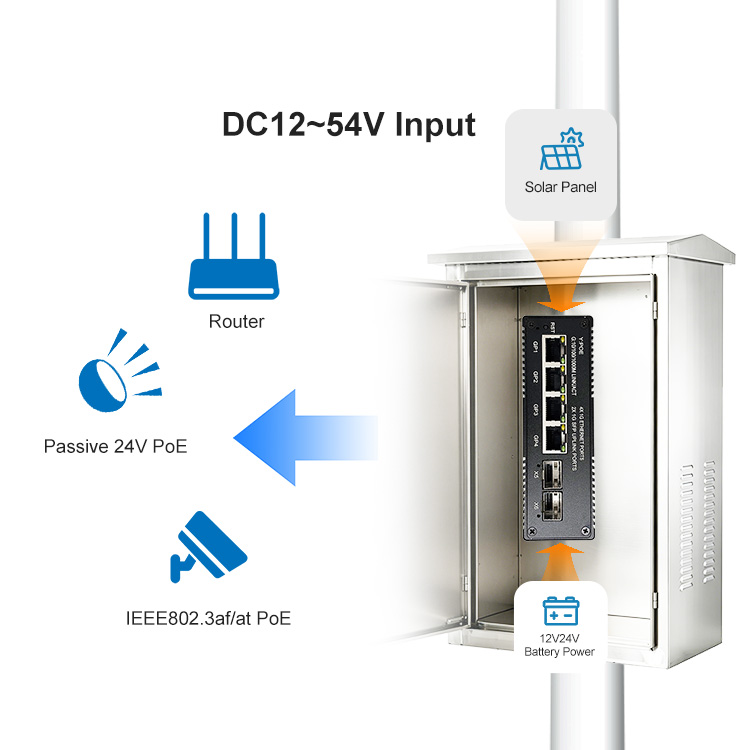
A solar POE switch integrates a POE switch with a solar power system, typically comprising solar panels, charge controllers, and batteries. It converts solar energy into electrical power to run the switch itself and deliver power to connected devices via Ethernet cables. These switches are designed for outdoor environments where grid electricity is unavailable or impractical. They come in various port configurations, power budgets, and ruggedness levels. When evaluating options, it’s crucial to match the switch’s capabilities with the specific deployment requirements.
1.1 Power Budget and Solar System Sizing
The power budget of a solar POE switch determines how much power it can deliver to connected devices. Each POE port has a maximum power output (e.g., 15.4W for IEEE 802.3af, 30W for 802.3at, or 60W+ for 802.3bt). The total power budget is the sum of all ports’ power output, but the switch also consumes power for its own operation. For solar-powered systems, the solar panel and battery capacity must be sized to meet the total power consumption of the switch and its powered devices, accounting for solar insolation and backup requirements. FICOTEK’s industrial switches, for instance, feature low power consumption, making them efficient for solar applications. Their products support POE control and link aggregation, allowing users to manage power distribution effectively.
1.2 Environmental Resilience
Outdoor deployments expose switches to extreme temperatures, moisture, dust, lightning, and UV radiation. A suitable solar POE switch must have industrial-grade temperature resistance (typically -40°C to 75°C) and robust ingress protection (IP66 or higher). Lightning protection is critical to prevent damage from surges. FICOTEK’s products incorporate outdoor lightning protection capabilities and are built to withstand harsh conditions. Their switches are widely used in petroleum, energy storage, high-speed rail, wind power, and security applications, demonstrating their reliability.
undefined
2. Network Management Features
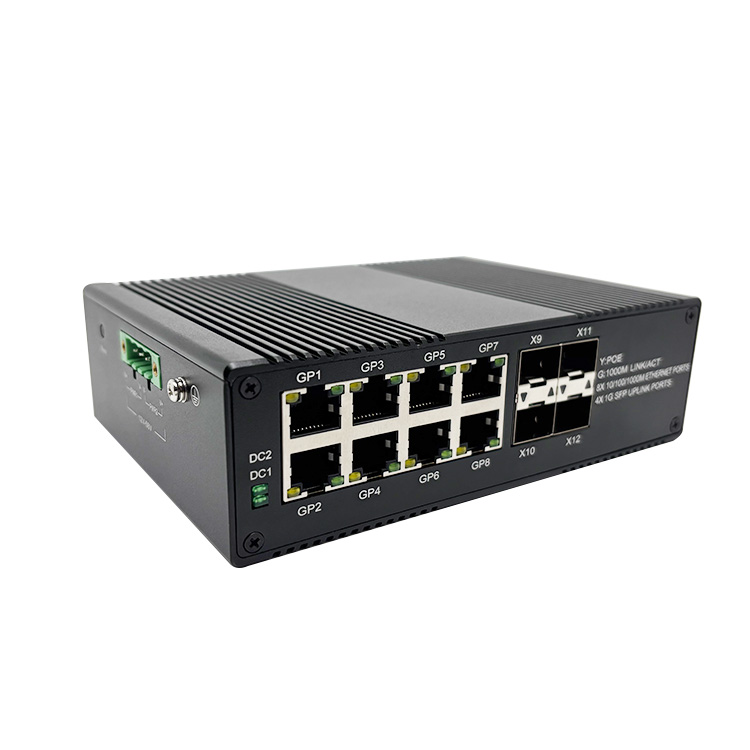
Even in outdoor deployments, network management capabilities can simplify monitoring and troubleshooting. Lightweight network management features such as VLAN, QoS, RSTP, ERPS, SNMP, POE control, and link aggregation enhance performance and security. For solar-powered networks, energy efficiency is paramount; features like POE scheduling (turning off ports during low usage) can reduce power consumption. FICOTEK’s switches offer these features with lower power consumption, tailored for remote installations.
2.1 VLAN and QoS
VLAN (Virtual Local Area Network) segmentation isolates traffic for security or performance reasons. QoS (Quality of Service) prioritizes critical traffic like video surveillance over less sensitive data. These are essential in multi-service outdoor networks.
2.2 Redundancy Protocols
RSTP (Rapid Spanning Tree Protocol) and ERPS (Ethernet Ring Protection Switching) provide network redundancy, ensuring minimal downtime if a link fails. This is vital for critical applications such as security monitoring in remote areas.
2.3 SNMP and Remote Monitoring
SNMP (Simple Network Management Protocol) enables remote monitoring and management of the switch’s health, power status, and ports. In solar deployments, this allows operators to check battery levels and solar panel performance without physical visits.
3. Manufacturer Reliability and Support
A solar POE switch is a long-term investment. Choosing a reputable manufacturer ensures product quality, customization options, and after-sales support. Shenzhen Ficotek Photonics Co., Ltd. (FICOTEK) adheres to a business philosophy of efficient innovation and people-oriented management. With decades of experience in optoelectronic and optical communication products, the company has a team of seasoned management and technical engineers. FICOTEK owns its factory, which continuously expands capacity and employs skilled workers. They provide customized products with independent intellectual property rights, along with OEM and ODM services. Their after-sales service includes one-year replacement, three-year warranty, and lifetime technical support, offering peace of mind for outdoor deployments.
3.1 Quality Assurance and Patents
FICOTEK has complete R&D, production equipment, and testing instruments, covering the entire supply chain from optical components (TOSA, ROSA, BOSA) to optical modules, media converters, and industrial switches. All products undergo rigorous reliability verification before market launch. The company holds invention patents and utility model patents, demonstrating its commitment to innovation.
4. Key Considerations for Deployment
When planning a solar POE switch installation, consider the following steps:
- Assess power requirements: Calculate total power needed for the switch and all powered devices, then size the solar panel and battery accordingly. Include a safety margin for cloudy days.
- Evaluate environmental conditions: Check temperature extremes, humidity, exposure to lightning, and physical security. Select an enclosure with appropriate IP rating and integrated surge protection.
- Choose management features: Decide if you need remote monitoring, redundancy, or VLANs. Simpler deployments may only require unmanaged switches, but managed ones offer greater flexibility.
- Plan for scalability: Leave extra ports and power budget for future expansion. FICOTEK switches support link aggregation to increase bandwidth.
- Select mounting and cabling: Use outdoor-rated Ethernet cables (e.g., UV-resistant) and proper grounding to avoid interference.
5. Case Studies and Applications
FICOTEK’s industrial solar POE switches have been deployed in various sectors:
| Industry | Application | Benefit |
|---|---|---|
| Petroleum | Remote wellhead monitoring | Solar power eliminates cabling cost; rugged design withstands extreme temperatures. |
| Energy Storage | Battery farm surveillance | Low power consumption extends battery life; SNMP allows remote health check. |
| High-Speed Rail | Track-side cameras and sensors | ERPS ensures network reliability; lightweight management reduces complexity. |
| Security | Perimeter surveillance in remote areas | POE control schedules night-time power; lightning protection prevents damage. |
6. Technical Specifications to Compare
When comparing solar POE switches, examine these specifications:
- Number of POE ports and per-port power budget (e.g., 8 ports 30W each)
- Total power budget (e.g., 240W)
- Operating temperature range (e.g., -40°C to 75°C)
- Protection features (surge protection level, IP rating)
- Management capabilities (web, CLI, SNMP)
- Solar input voltage range and battery charging algorithm
- Power consumption of the switch itself (idle and full load)
- Certifications (CE, FCC, RoHS, etc.)
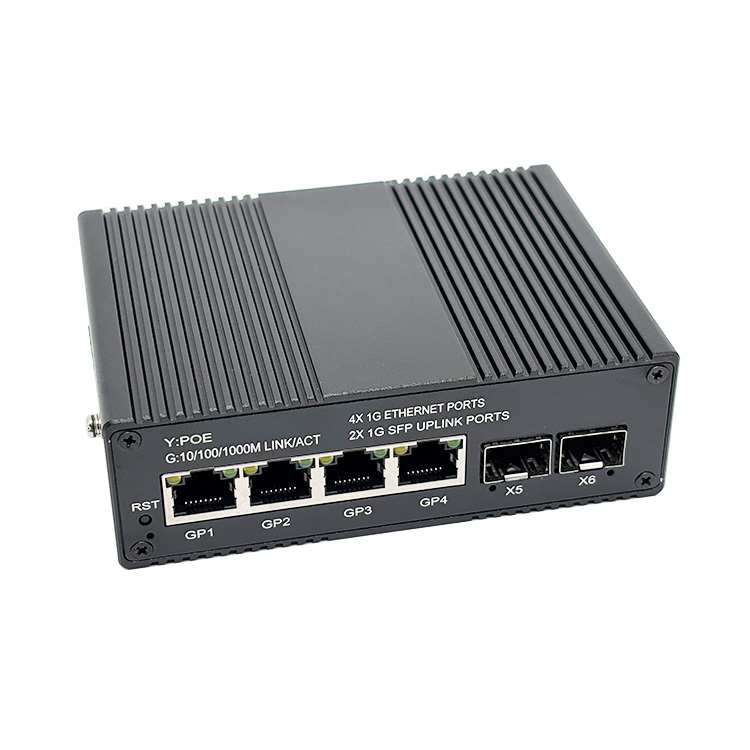
FICOTEK’s product line includes various configurations to meet these criteria. Their switches are designed with industrial-grade components and offer lightweight network management for efficiency.
7. Installation and Maintenance Best Practices
Proper installation ensures longevity and performance. Key practices include:
- Mount the switch in a shaded location to reduce solar heat gain, but ensure the solar panel gets adequate sun.
- Use weatherproof connectors and seal cable entries with silicone or gaskets.
- Ground the switch and solar system to prevent lightning damage. FICOTEK switches come with integrated lightning protection.
- Regularly inspect batteries and solar panels; clean dust from panels.
- Update firmware periodically; FICOTEK provides lifetime technical support for assistance.
8. Cost Analysis and ROI
While solar POE switches have higher upfront cost than grid-powered ones, they eliminate trenching and cabling expenses. Over time, savings in installation and electricity bills yield a positive ROI, especially for remote sites. FICOTEK offers competitive pricing with custom options, and their warranty reduces total cost of ownership.
9. Future Trends
The industry is moving towards higher power POE standards (90W per port) and more efficient solar panels. FICOTEK continues to innovate, leveraging its R&D capabilities from optical components to complete systems. Their commitment to patents and quality positions them well for emerging IoT and smart city applications.
Conclusion
Selecting the right solar POE switch for outdoor deployment involves balancing power needs, environmental durability, network management, and manufacturer support. By partnering with a reliable company like FICOTEK, with its own factory, customizable products, and robust after-sales service, users can ensure a successful installation. Whether for petroleum, energy storage, high-speed rail, or security, a well-chosen solar POE switch enables reliable, green connectivity in the most remote locations.