

This article provides an in-depth overview of the quality control processes at Shenzhen Ficotek Photonics Co, Ltd (FICOTEK), a leading manufacturer of solar POE switches. The company emphasizes quality from incoming material inspection (IQC) through production, including SMT assembly, conformal coating, and firmware validation. Reliability testing such as temperature cycling, humidity, vibration, and lightning protection ensures products withstand harsh industrial environments. Final testing includes 100% functional verification and burn-in. FICOTEK offers OEM/ODM services with a one-year replacement, three-year warranty, and lifetime support. The factory holds patents and certifications (CE, FCC, RoHS) and follows ISO9001. By implementing rigorous controls, FICOTEK ensures high-quality, reliable solar POE switches for applications in petroleum, energy storage, high-speed rail, wind power, and security.
In the rapidly evolving field of industrial networking, Solar POE switches have become critical components for powering and connecting devices in harsh environments. Ensuring the reliability and performance of these switches requires rigorous quality control processes from manufacturing to final testing. This article delves into the quality control measures implemented by a leading manufacturer, Shenzhen Ficotek Photonics Co, Ltd (FICOTEK), known for its innovative optoelectronic and optical communication products. With a focus on solar POE switches, we explore how FICOTEK upholds the highest standards through every stage of production.
1. Incoming Material Quality Control (IQC)
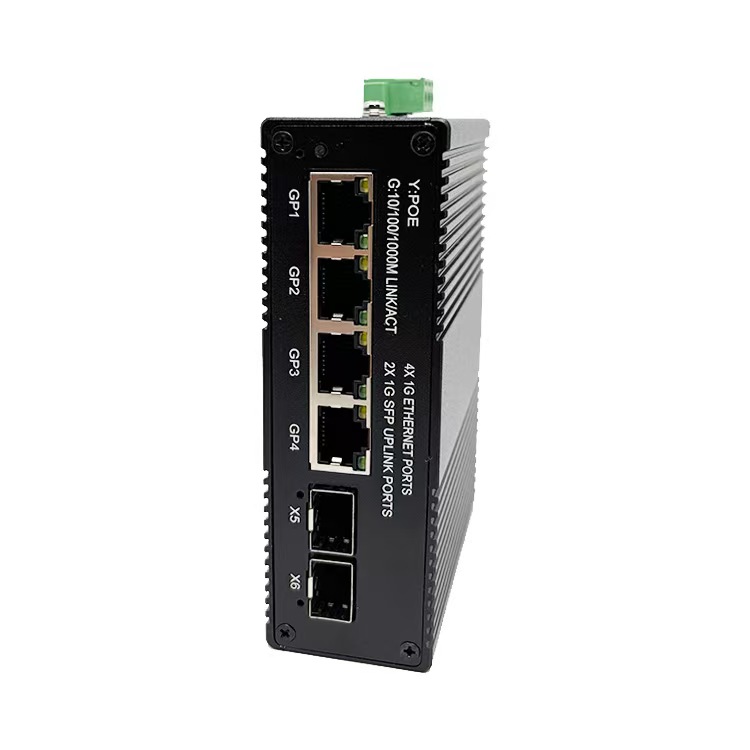
At FICOTEK, quality begins with raw materials. The company sources components from certified suppliers and subjects each batch to strict inspection. Photonic components like TOSA, ROSA, and BOSA are tested for optical performance. Electronic parts, including PoE controllers and transformers, undergo electrical parameter verification. All materials are checked against specifications using advanced instruments such as spectrometers and multimeters. Only materials meeting the rigorous criteria proceed to production.
Material Traceability
Every component receives a unique barcode linked to the supplier, lot number, and inspection results. This traceability system ensures that any quality issue can be traced back to its root cause, facilitating rapid corrective actions. FICOTEK maintains a comprehensive database of supplier performance, enabling continuous improvement.
2. Production Process Control
FICOTEK operates its own factory with a complete production chain from optical components to industrial switches. The manufacturing process is divided into several stages, each with dedicated quality checkpoints.
Surface Mount Technology (SMT) Line
The SMT line uses automated pick-and-place machines with high precision. Solder paste inspection (SPI) and automatic optical inspection (AOI) machines verify solder joint quality. Any defects are flagged, and the board is reworked or discarded. FICOTEK’s engineers monitor temperature profiles of reflow ovens to ensure optimal soldering.
Through-Hole and Manual Assembly
For components like power connectors and transformers, through-hole soldering is performed. Operators follow standardized work instructions. Visual inspection and X-ray inspection for hidden joints guarantee integrity. All operators are trained and certified, with regular skill assessments.
Final Assembly and Conformal Coating
Solar POE switches require protection against moisture, dust, and vibration. FICOTEK applies conformal coating to PCBs using robotic sprayers. Coating thickness and coverage are inspected under UV light. The assembly of housing, heatsinks, and connectors is done in clean-room environments to prevent contamination.
3. In-Process Quality Checks
Throughout production, random audits are performed by quality engineers. Key parameters such as torque on screws, gap tolerances, and seal integrity are measured. FICOTEK employs statistical process control (SPC) to monitor trends and adjust processes before defects occur. Any out-of-control condition triggers an immediate review.
Firmware and Software Validation
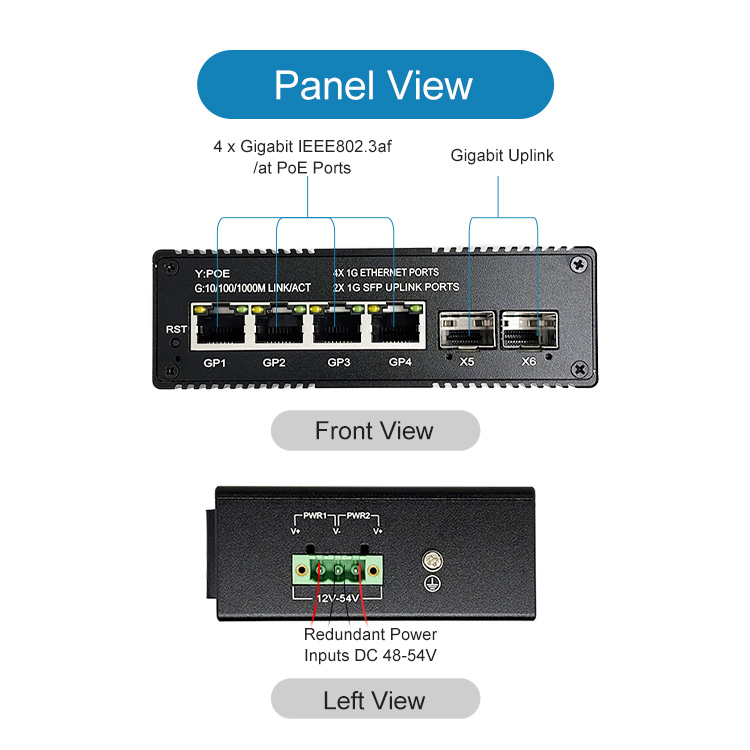
Before final assembly, every switch is programmed with the latest firmware. Engineers test VLAN, QoS, RSTP, ERPS, SNMP, PoE control, and link aggregation functionalities. Custom software validates that all network features work correctly. FICOTEK’s R&D team provides support for OEM/ODM customers, ensuring unique requirements are met.
4. Reliability Testing
FICOTEK subjects each product to rigorous reliability verification. As the company states, “Any product launched by FICOTEK to the market has undergone rigorous reliability verification.” The testing regimen includes:
- Temperature Cycling: Switches are cycled between -40°C and +85°C for hundreds of cycles to simulate extreme environments.
- Humidity Testing: 85% relative humidity at 85°C for 1000 hours assesses corrosion resistance.
- Vibration and Shock: Random vibration test per IEC 60068-2-64 ensures mechanical robustness.
- Lightning Protection: Surge immunity testing up to 6kV per IEC 61000-4-5 validates outdoor protection capabilities.
- Power Consumption: PoE power efficiency is measured to confirm lower power consumption claims.
These tests replicate real-world conditions in industries such as petroleum, energy storage, high-speed rail, wind power, and security.
5. Final Quality Control (FQC) and Outgoing Quality Assurance (OQA)
Each finished switch undergoes a 100% functional test. Automated test stations check all ports, PoE output power, data throughput, and management features. A visual inspection checks for cosmetic defects. After passing, the switch is packed with accessories and manuals. Samples from each batch are subjected to long-term burn-in testing (48 hours at elevated temperature) to catch infant mortality. FICOTEK’s OQA team performs AQL sampling based on ISO 2859 standards.
6. After-Sales Quality Support
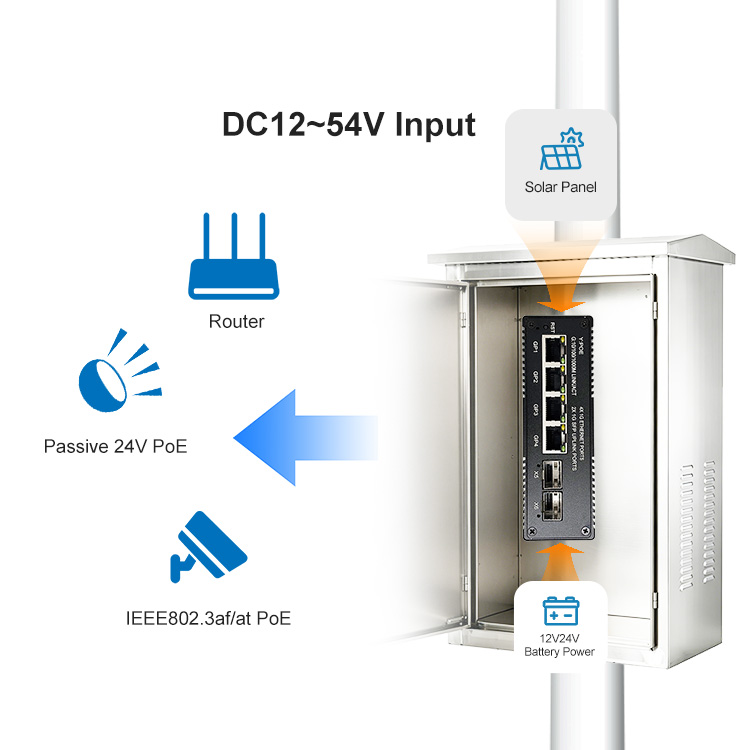
FICOTEK stands behind its products with a comprehensive warranty: “one-year replacement, three-year warranty, and lifetime technical support.” This commitment is backed by a global service network. Any quality issue is documented and analyzed using root cause analysis, leading to process improvements.
Customers can benefit from OEM/ODM services, including custom labeling, firmware, and hardware modifications. FICOTEK’s experienced engineers provide strong technical support from design to deployment.
7. Certifications and Patents
FICOTEK holds invention and utility model patents, demonstrating its innovation in optical communication and industrial switches. The factory complies with ISO9001 quality management standards. Products carry CE, FCC, and RoHS certifications. The company also offers industrial-grade temperature resistance and outdoor lightning protection, meeting the demands of harsh environments.
Conclusion
Quality control in a solar POE switch factory is a multi-layered process that starts from material selection and continues through manufacturing, testing, and after-sales support. Shenzhen Ficotek Photonics Co, Ltd exemplifies a commitment to quality with its complete R&D and production capabilities, state-of-the-art equipment, and rigorous testing protocols. By understanding these quality control processes, customers can make informed decisions and trust that their network infrastructure will perform reliably even in the most challenging conditions.
For more information about FICOTEK’s products and services, visit their factory or contact their team. With a people-oriented philosophy and efficient innovation, they continue to drive the industry forward.