

The article explores the fundamental differences between solar PoE switch manufacturers and brands, emphasizing that manufacturers are the entities that physically produce products, while brands are marketing identities. It argues that for solar applications, which demand high reliability in harsh environments, choosing a manufacturer with vertical integration offers significant advantages. Using Shenzhen Ficotek Photonics Co., Ltd. (FICOTEK) as a case study, the article highlights how a manufacturer with its own factory, complete R&D and production capabilities, and rigorous testing ensures product quality, customization possibilities (OEM/ODM), and robust after-sales support (one-year replacement, three-year warranty, lifetime technical support). FICOTEK’s products feature industrial-grade temperature resistance, lightning protection, and advanced network management features, tailored for sectors like petroleum, energy storage, and wind power. The article contrasts this with brand-only companies that outsource production, potentially compromising quality control and customization. Key factors to consider include application environment, need for customization, long-term support, quality assurance (patents held by FICOTEK), and cost versus value. The conclusion stresses that for critical solar installations, the manufacturer’s direct control over production leads to better performance and lower total cost of ownership, urging professionals to look beyond brand names.
In the rapidly evolving landscape of industrial networking, solar-powered PoE switches have emerged as a critical component for remote and renewable energy applications. However, when selecting a solar PoE switch, professionals often encounter a dilemma: should they prioritize the manufacturer or the brand? While the two terms are frequently used interchangeably, they represent fundamentally different aspects of product quality, support, and long-term value. This article delves into the real differences between manufacturer and brand, using real-world insights from companies like FICOTEK to illuminate the decision-making process.
Understanding the Core Difference
At its simplest, a manufacturer is the entity that physically produces the product, overseeing everything from component sourcing to assembly and testing. A brand, on the other hand, is the identity under which the product is marketed and sold—often associated with customer perception, reputation, and after-sales service. In the solar PoE switch market, many well-known brands may not own their own factories; they outsource production to original design manufacturers (ODMs) or contract manufacturers. This separation can lead to discrepancies in quality control, customization ability, and long-term support.
When you buy from a manufacturer like Shenzhen Ficotek Photonics Co., Ltd. (FICOTEK), you are directly connected to the production line. This means you can influence design, request modifications, and benefit from the manufacturer’s full engineering expertise. In contrast, buying from a brand that does not manufacture may limit your access to technical depth and rapid iteration. The real difference lies in vertical integration versus brand-centric marketing.
undefined
Why Manufacturing Capabilities Matter for Solar PoE Switches
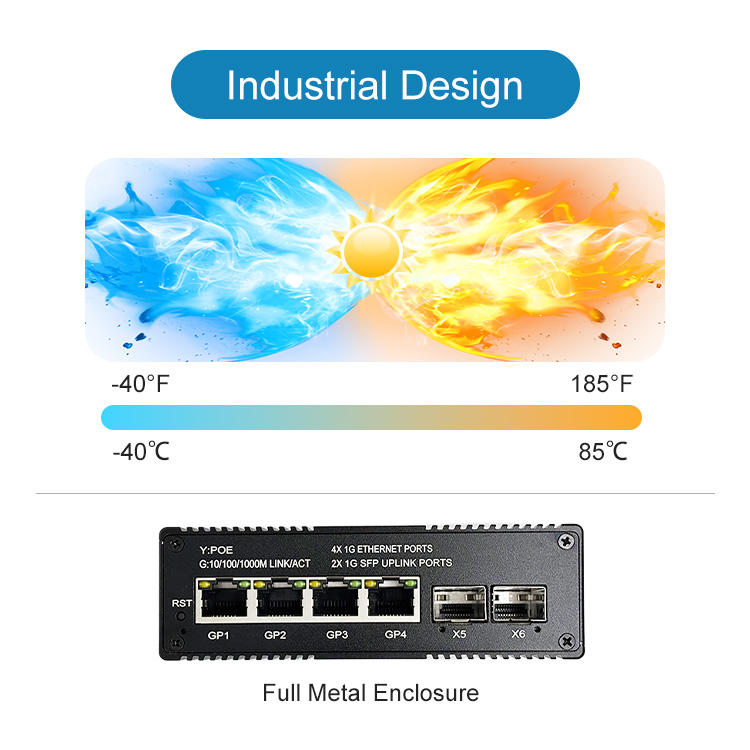
Solar PoE switches are deployed in harsh environments—extreme temperatures, outdoor exposure, and unstable power sources. Their reliability depends on rigorous testing, robust components, and precise assembly. Manufacturers with in-house research and development (R&D) and production facilities can ensure every unit meets stringent standards. FICOTEK, for example, operates its own factory, has complete R&D equipment, and performs reliability verification on all products before market launch. This level of control is difficult for pure brand companies to replicate.
Moreover, manufacturing expertise allows for customization. In the solar energy sector, projects often require specific port configurations, power budgets, or network management features. A manufacturer can offer OEM/ODM services to tailor products exactly to project needs. FICOTEK provides customized products with independent intellectual property rights, along with one-year replacement, three-year warranty, and lifetime technical support—a clear advantage over brands that may rely on standardized inventory.
Brand Value: More Than Just a Name
Brands, however, bring value through marketing, user experience, and ecosystem integration. A well-known brand may offer intuitive software, widespread compatibility, and a trusted reputation. For buyers who need quick deployment and minimal customization, brand reliability can be appealing. But without manufacturing ownership, the brand depends on its supply chain for quality consistency. If the manufacturer changes or cuts corners, the brand’s reputation suffers.
The real question is: what trade-offs are you willing to make? For mission-critical solar installations where downtime is costly, the deep technical support and customization from a manufacturer like FICOTEK can be invaluable. For simpler deployments, a brand’s ease-of-use may suffice.
Case Study: FICOTEK – A Manufacturer with Full Vertical Integration
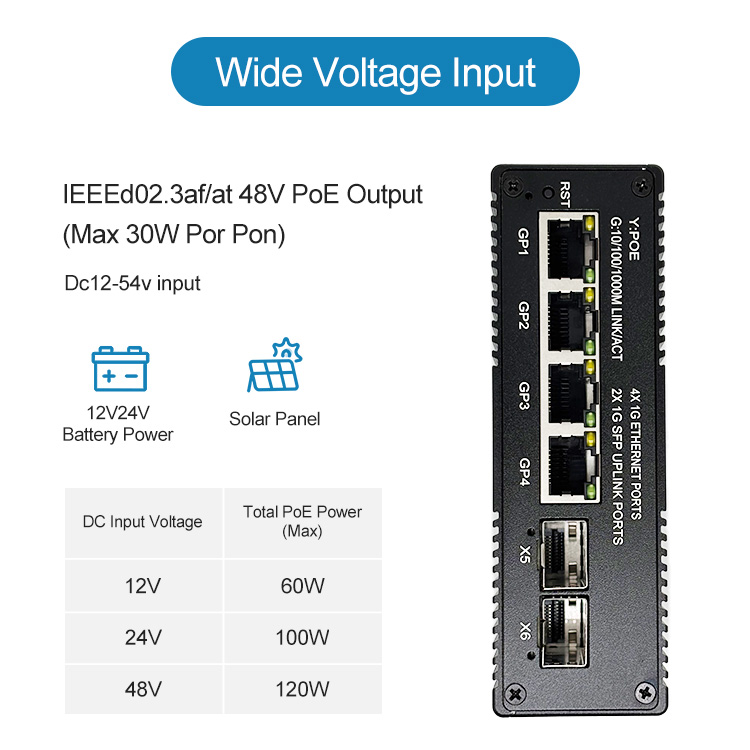
To illustrate the manufacturer advantage, let’s examine FICOTEK closely. Founded in Shenzhen, the company adheres to a business philosophy of efficient innovation and people-oriented management. Its team includes veterans in optoelectronic and optical communication product development, as well as experienced production and process engineers. This expertise translates into products with industrial-grade temperature resistance, outdoor lightning protection, and features like VLAN, QoS, RSTP, ERPS, SNMP, PoE control, link aggregation, and low power consumption—all critical for solar-powered networks.
Manufacturing Depth
FICOTEK owns complete R&D and production equipment, including product testing instruments. The company has full capabilities across the entire industry chain: from optical components to TOSA/ROSA/BOSA, optical modules, media converters, and industrial-grade switches. This vertical integration ensures quality at every stage. Every product undergoes rigorous reliability verification before reaching the market. The factory’s growing size and workforce have steadily increased production capacity, allowing for timely delivery even for large-scale solar projects.
Customization and Support
One standout feature is FICOTEK’s ability to provide OEM and ODM services. Customers can request products with independent intellectual property rights tailored to their specific applications—be it petroleum, energy storage, high-speed rail, wind power generation, or security. The after-sales policy is exceptionally strong: one-year replacement, three-year warranty, and lifetime technical support. This commitment is backed by the manufacturer’s direct control over spare parts and engineering resources.
Key Factors to Consider When Choosing Between Manufacturer and Brand
1. Application Environment
Solar PoE switches are often placed in remote, extreme locations. Manufacturers with proven track records in industrial conditions, like FICOTEK, should be preferred. Their products are designed to withstand -40°C to 75°C, and withstand lightning surges.
2. Need for Customization
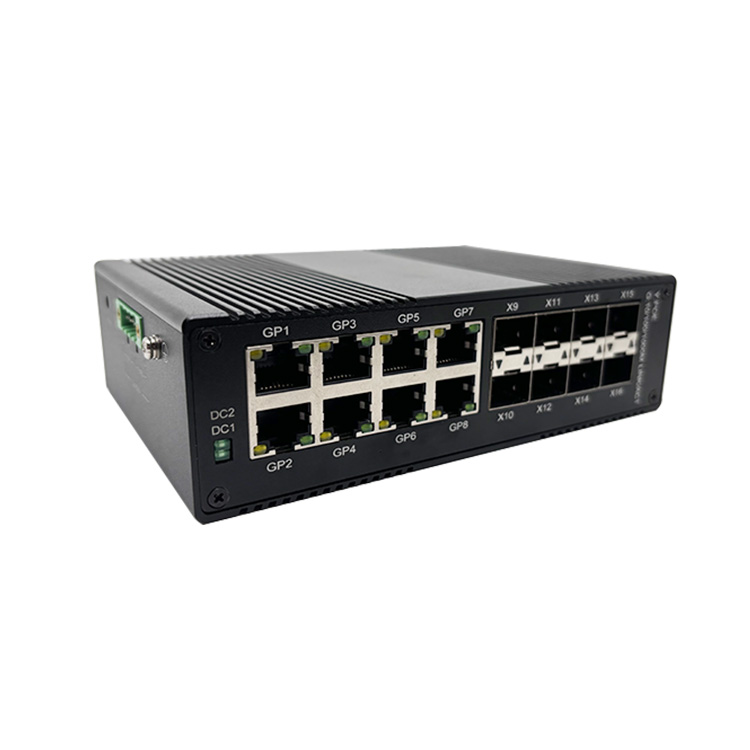
If your project requires unique specifications—such as specific port counts, power over Ethernet budgets, or network protocols—a manufacturer that offers OEM/ODM is essential. Brands typically offer limited configuration options.
3. Long-Term Support
Manufacturers with deep engineering resources can provide long-term technical support, firmware updates, and replacement parts. FICOTEK’s lifetime support is a significant advantage over brands that may discontinue models or outsource support.
4. Quality Assurance
Manufacturers that perform in-house reliability testing (including invention patents and utility model patents) demonstrate a commitment to quality. FICOTEK holds such patents, ensuring innovation and protection against counterfeits.
5. Cost vs. Value
While manufacturers often offer competitive pricing due to eliminated middlemen, the real value is in reduced downtime and longer lifespan. A slightly higher upfront cost from a manufacturer may yield lower total cost of ownership.
Conclusion
The difference between a solar PoE switch manufacturer and a brand is not merely semantic—it impacts product quality, customization, support, and long-term reliability. For demanding solar installations, partnering with a vertically integrated manufacturer like FICOTEK, which possesses its own factory, complete R&D capabilities, and a strong after-sales policy, is often the superior choice. While brands can offer convenience and marketing polish, they cannot match the technical depth and flexibility of a true manufacturer. As the solar industry continues to expand, professionals who understand this distinction will make more informed decisions, ensuring their networks are powered by performance, not just perception.
Whether you choose a manufacturer or a brand, always evaluate the underlying supply chain and engineering capabilities. The real difference lies in who controls the production line—and that control can make all the difference in the field.