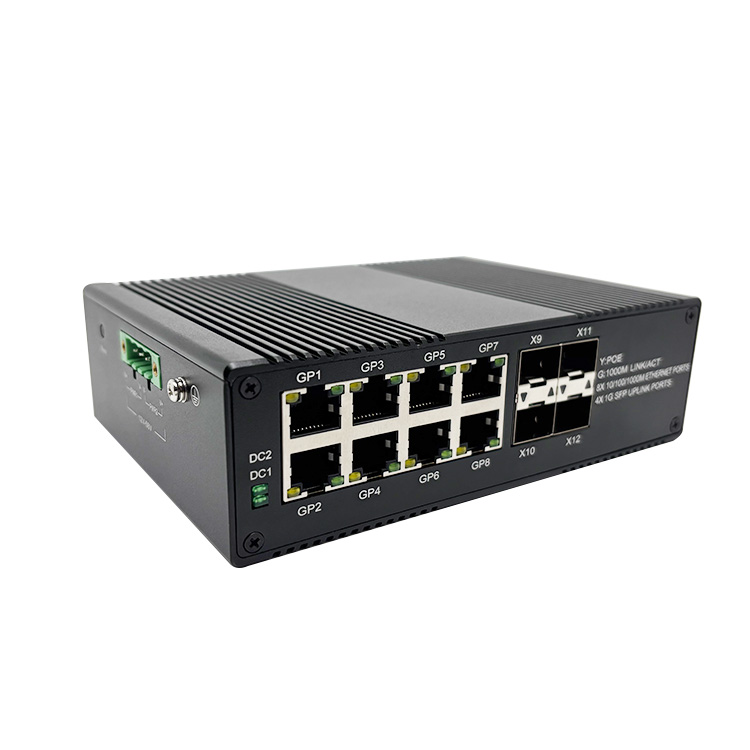
This article provides a comprehensive guide to calculating the PoE budget for solar-powered PoE switches, emphasizing the importance of accurate power estimation for reliable off-grid network operations. It begins by explaining PoE standards (802.3af, at, bt) and the key factors influencing power consumption, including the number of powered devices, cable length, switch overhead, and environmental temperature. The article then integrates solar system considerations, such as panel sizing, battery storage, and efficiency losses, offering a step-by-step calculation example. Highlighting FICOTEK’s role, the article showcases how their industrial-grade switches are engineered for low power consumption, high temperature resistance, and outdoor lightning protection, making them ideal for solar applications. FICOTEK’s commitment to quality is emphasized through their own factory, OEM/ODM services, and robust after-sales support (one-year replacement, three-year warranty, lifetime technical support). The article also covers advanced features like VLAN, QoS, RSTP, ERPS, SNMP, and PoE control that enhance network management and energy savings. With a focus on real-world applications in petroleum, energy storage, high-speed rail, wind power, and security, the article guides readers through using a PoE budget calculator tool and concludes that selecting efficient switches like those from FICOTEK reduces overall system cost and increases reliability. The summary underscores that accurate power budgeting, combined with FICOTEK’s innovative product line, ensures a sustainable and high-performance solar-powered network solution.
Power over Ethernet (PoE) has revolutionized the way we deploy network devices, eliminating the need for separate power cables and enabling flexible installations. When combined with solar energy, PoE switches become even more powerful, allowing remote and off-grid deployments for surveillance, wireless access points, and IoT sensors. However, designing a solar-powered PoE system requires careful calculation of the total power budget to ensure reliable operation. This article dives deep into the PoE budget calculator, exploring the factors that influence power consumption and how to accurately determine your needs. We also highlight how FICOTEK, a leader in industrial networking, provides solutions tailored for such demanding environments.
Understanding PoE Standards and Power Budgets
PoE technology is governed by IEEE standards that define the maximum power that can be delivered over Ethernet cables. The most common standards are IEEE 802.3af (PoE) delivering up to 15.4W per port, IEEE 802.3at (PoE+) delivering up to 30W, and IEEE 802.3bt (PoE++) delivering up to 60W or even 100W. The total PoE budget of a switch is the sum of power available to all ports simultaneously. For solar-powered systems, the switch’s power consumption plus the PoE budget must be supplied by the solar panel and battery system.
Key Factors in Calculating PoE Budget
To calculate the required PoE budget, you need to account for:
undefined
- Number of powered devices (PDs): Each PD consumes a certain amount of power based on its class. For example, a standard IP camera might consume 5-10W, while a PTZ camera could require 25W.
- Cable length: Longer cables introduce resistance, causing voltage drop and power loss. The IEEE standards assume a maximum cable length of 100 meters.
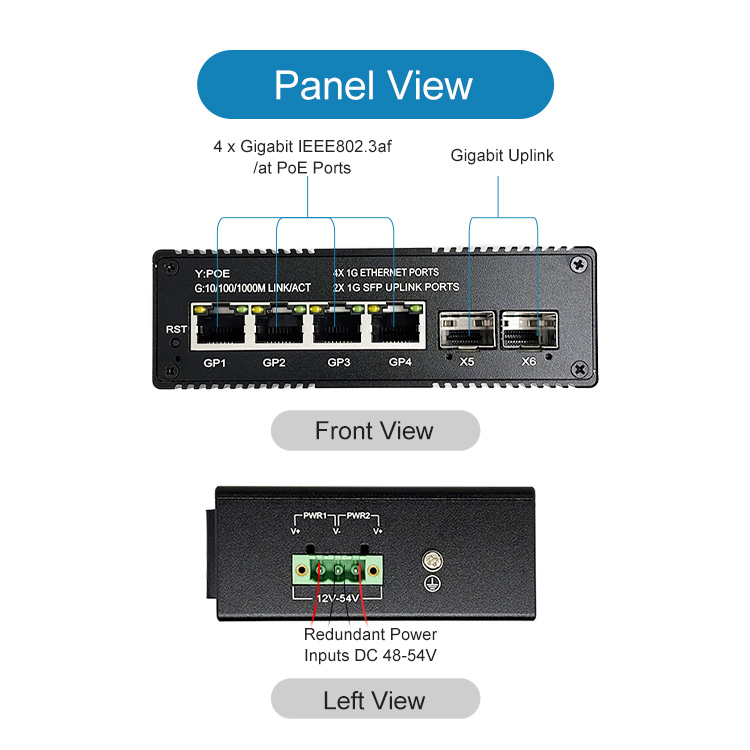
- Switch overhead: The switch itself consumes power to operate its internal circuitry. Industrial switches like those from FICOTEK are designed for low power consumption while maintaining high performance.
- Environmental temperature: High temperatures can increase power dissipation in switches and reduce solar panel efficiency.
- Solar system efficiency: Solar panels, charge controllers, and batteries have efficiency losses (typically 15-25%).
Solar Power System Components and Sizing
A typical solar-powered PoE system includes solar panels, a charge controller, batteries, and the PoE switch. The switch’s power budget includes both its own consumption and the power delivered to connected PDs. For example, a FICOTEK industrial switch with a 240W PoE budget may consume 30W internally, so total load is 270W. To calculate the solar panel size, multiply the total daily energy consumption (in watt-hours) by a safety factor (e.g., 1.2) and divide by the peak sun hours (PSH) for the location.
FICOTEK’s Approach to Efficient PoE Switching
Shenzhen Ficotek Photonics Co., Ltd. (FICOTEK) has developed a range of industrial PoE switches that are ideal for solar applications. With a business philosophy of efficient innovation and people-oriented, FICOTEK’s products feature low power consumption, industrial-grade temperature resistance, and outdoor lightning protection. The switches support VLAN, QoS, RSTP, ERPS, SNMP, PoE control, and link aggregation, all while minimizing energy use. This is critical for solar systems where every watt counts.
FICOTEK’s own factory ensures strict quality control and customization capabilities. They can provide OEM and ODM services, and each product undergoes rigorous reliability verification. Their switches are backed by a one-year replacement, three-year warranty, and lifetime technical support. This makes them a reliable choice for remote and harsh environments like petroleum, energy storage, high-speed rail, wind power, and security.
Step-by-Step PoE Budget Calculation
Let’s walk through an example. Suppose you have a solar-powered surveillance system with 10 IP cameras, each consuming 12W (PoE+ class 4), and one wireless bridge consuming 20W. The total PD power is (10*12) + 20 = 140W. Adding a FICOTEK switch with a 200W PoE budget and 15W internal consumption gives a total load of 155W. For a 24-hour operation, daily energy = 155W * 24h = 3720 Wh. Accounting for inverter and battery losses (20% efficiency), you need 3720 / 0.8 = 4650 Wh. With an average of 5 peak sun hours, the solar array must produce 4650 / 5 = 930W. Adding a 20% safety margin gives 1116W, so you might choose two 600W panels.
Using a PoE Budget Calculator Tool
Many online tools simplify this process. A typical PoE budget calculator asks for the number of devices, their power consumption, cable length, and switch model. It then outputs the total PoE budget required and suggests solar panel and battery sizes. FICOTEK’s products are compatible with such calculators, and their low power consumption means smaller solar arrays are needed.
Advanced Features of FICOTEK Switches
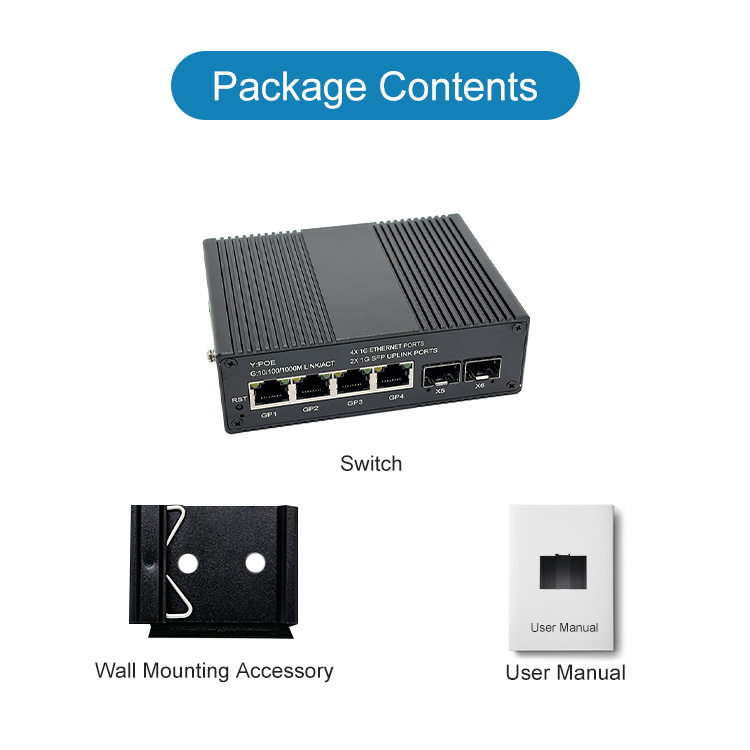
Beyond power efficiency, FICOTEK switches offer advanced network management features. With lightweight network management, they support VLAN segmentation for security, QoS for prioritizing video traffic, RSTP/ERPS for network redundancy, and SNMP for remote monitoring. PoE control allows automatic shutdown of non-critical devices to save power. These features enhance the reliability of solar-powered networks.
Quality Assurance and Intellectual Property
FICOTEK has complete R&D and production capabilities across the entire industry chain, from optical components to industrial switches. They hold invention patents and utility model patents for their technologies. Every product launched to the market has undergone rigorous reliability verification, including temperature cycling, vibration, and surge testing. This ensures that switches perform reliably in solar installations exposed to weather extremes.
Conclusion
Calculating the PoE budget for a solar-powered switch involves careful consideration of device power, system losses, and environmental factors. By using low-power industrial switches like those from FICOTEK, you can optimize your solar setup for cost and reliability. FICOTEK’s commitment to innovation, quality, and customer support makes them a trusted partner for any remote or off-grid networking project. Whether you need a custom PoE switch or a complete solar solution, FICOTEK provides the expertise and products to ensure you have exactly the power you need.
Related Products from FICOTEK
FICOTEK offers a range of industrial PoE switches with various port counts and PoE budgets. Their switches are designed for outdoor and harsh environments, with wide temperature ranges and lightning protection. For more information, visit their website or contact their team for a customized solution.