

Choosing between a Solar POE switch supplier and a manufacturer significantly impacts product quality, cost, customization, and support. Manufacturers like Shenzhen Ficotek Photonics Co., Ltd. offer direct control over production, enabling rigorous quality checks, OEM/ODM services, competitive pricing for bulk orders, and lifetime technical support. Their products feature industrial-grade temperature resistance, lightning protection, and advanced network management, ideal for demanding industries. Suppliers provide broader selection, lower MOQs, and faster delivery but with less control over quality and customization. This article compares both options, highlighting key factors and offering guidance for making the right choice based on project requirements.
When sourcing Solar POE (Power over Ethernet) switches for your next project, one of the most critical decisions is whether to partner with a supplier or a manufacturer. Each option has its unique advantages and drawbacks, and the best choice depends on your specific requirements, budget, and long-term goals. This article delves deep into the differences between suppliers and manufacturers, providing a comprehensive guide to help you make an informed decision.
Understanding the Basics: Supplier vs Manufacturer
A manufacturer is a company that designs, produces, and assembles products in its own facilities. They own the production line, control the supply chain, and often hold intellectual property rights for their designs. In contrast, a supplier (or distributor) purchases products from multiple manufacturers and sells them to end-users. They may offer a wider variety of brands and models but have limited control over product quality and customization.
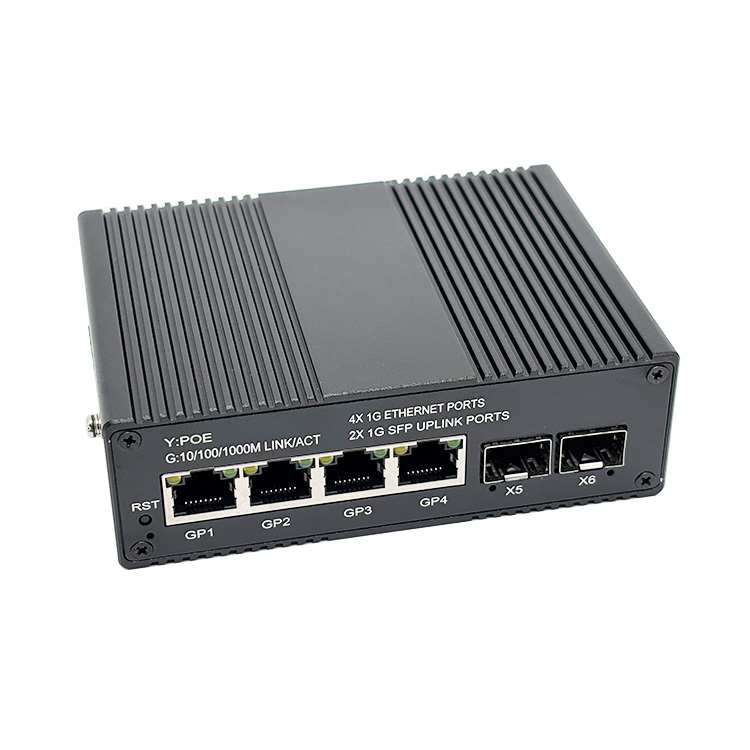
For Solar POE switches, the choice between a supplier and a manufacturer can impact product reliability, customization options, pricing, and after-sales support. Below, we examine the key factors to consider.
Advantages of Working with a Manufacturer
1. Direct Quality Control
Manufacturers like Shenzhen Ficotek Photonics Co., Ltd. have complete control over the production process. They adhere to rigorous quality checks from raw materials to final assembly. Ficotek, for example, boasts a full industry chain from optical components to TOSA/ROSA/BOSA, to Optical Modules, Media Converters, and Industrial-grade Switches. Every product launched to the market undergoes strict reliability verification, ensuring high performance and durability.
2. Customization and OEM/ODM Services
Manufacturers can tailor products to meet specific customer requirements. Ficotek provides customized products with independent intellectual property rights and offers OEM and ODM services. This flexibility allows customers to modify hardware features, firmware, or even branding. Such customization is often impossible when dealing with general suppliers.
3. Competitive Pricing
By cutting out middlemen, manufacturers can offer more competitive prices, especially for large-scale orders. Ficotek’s own factory has continuously grown in size and employee numbers, increasing production capacity and enabling economies of scale.
4. Technical Expertise and Support
Manufacturers typically have in-house R&D teams with deep technical knowledge. Ficotek’s management includes experienced professionals in optoelectronics and optical communication, and its production and process engineers provide strong technical support. Customers benefit from expert advice during design and deployment, as well as lifetime technical support, one-year replacement, and three-year warranty.
5. Product Innovation
Manufacturers often hold patents and utility models, driving innovation. Ficotek owns invention patents and utility model patents. Their products feature industrial-grade temperature resistance, outdoor lightning protection, lightweight network management, VLAN, QoS, RSTP, ERPS, SNMP, POE control, link aggregation, and lower power consumption. These innovations are ideal for industries like petroleum, energy storage, high-speed rail, wind power, and security.
Advantages of Working with a Supplier
1. Broader Product Selection
Suppliers aggregate products from multiple manufacturers, offering a wide range of brands, models, and price points. This is beneficial for customers who need to compare different options without contacting each manufacturer individually.
2. Lower Minimum Order Quantities (MOQs)
While manufacturers may require large MOQs to justify production runs, suppliers often have stock ready for smaller quantities. This is ideal for startups or pilot projects with limited budgets.
3. Convenience and Speed
Suppliers maintain inventory, so they can ship standard products quickly. For urgent orders, a supplier might be faster than waiting for a manufacturer to produce and assemble.
4. One-Stop Shopping
Suppliers may offer complementary products like cables, adapters, or other networking gear, simplifying procurement. However, this convenience often comes at a premium.
Key Factors to Consider When Choosing
| Factor | Manufacturer | Supplier |
|---|---|---|
| Product Quality | Consistent, directly controlled | Varies by brand, less control |
| Customization | High (OEM/ODM available) | Low to none |
| Pricing | Competitive for bulk orders | Higher due to markup |
| Technical Support | In-depth, direct from engineers | Limited to supplier’s knowledge |
| Lead Time | Longer (production required) | Shorter (stock available) |
| MOQ | Higher | Lower |
| Innovation | High (patents, R&D) | Low (relies on manufacturers) |
| After-Sales Service | Comprehensive warranty & support | Depends on manufacturer warranty |
FICOTEK: A Case Study of a Manufacturer
Shenzhen Ficotek Photonics Co., Ltd. exemplifies the advantages of working directly with a manufacturer. The company adheres to a business philosophy of efficient innovation and people-oriented management. With a team that includes experienced management and engineers who have long been engaged in the development and market expansion of optoelectronic and optical communication products, Ficotek provides strong technical support. Their own factory, which has grown in size and workforce, ensures increased production capacity. Customers can enjoy customized products with independent intellectual property rights, as well as OEM and ODM services. All customers receive after-sales service consisting of “one-year replacement, three-year warranty, and lifetime technical support.” Ficotek’s products are designed for harsh environments, with industrial-grade temperature resistance and outdoor lightning protection. They also feature lightweight network management, VLAN, QoS, RSTP, ERPS, SNMP, POE control, link aggregation, and lower power consumption, making them suitable for industries such as petroleum, energy storage, high-speed rail, wind power generation, and security. Moreover, Ficotek has complete R&D and production equipment and product testing instruments, encompassing the entire industry chain from optical components to TOSA ROSA BOSA, to optical modules, media converters, and industrial-grade switches. Any product launched to the market has undergone rigorous reliability verification.
When to Choose a Manufacturer
- You require custom features, such as specific port configurations, industrial temperature ratings, or proprietary firmware.
- You place large orders and want to reduce per-unit costs.
- Long-term partnership and direct technical support are important.
- Your project demands high reliability and proven quality control.
- You need lifetime technical support and a comprehensive warranty.
When to Choose a Supplier
- You need a small quantity for prototyping or a limited deployment.
- You need delivery urgently and cannot wait for production lead times.
- You want to compare multiple brands quickly.
- You lack the engineering resources to communicate directly with a manufacturer.
- Your requirements are standard and widely available.
Conclusion
Ultimately, the choice between a Solar POE switch supplier and a manufacturer depends on your specific needs. For projects that demand high quality, customization, and long-term support, a manufacturer like Ficotek is often the superior choice. Their direct control over production, technical expertise, and after-sales service can provide significant advantages. On the other hand, if you prioritize convenience, low MOQs, and fast delivery, a supplier may be more suitable. Assess your project’s scale, technical requirements, and budget to make the best decision.
By understanding the strengths and limitations of each option, you can build a reliable and cost-effective network infrastructure for your solar-powered applications.