

Solar PoE switches and DC PoE switches serve distinct purposes in network infrastructure. Solar PoE switches harness solar energy, making them ideal for remote, off-grid locations where grid power is unavailable. They reduce long-term energy costs and carbon footprint but require higher initial investment and more complex installation. DC PoE switches, on the other hand, rely on a standard DC power source, offering straightforward setup and consistent power delivery, suitable for urban and industrial environments with stable electricity. Key differences include power source, installation complexity, cost, environmental impact, and application scenarios. Shenzhen Ficotek Photonics Co., Ltd (FICOTEK) is a prominent manufacturer specializing in both types of industrial PoE switches. With its own factory, full R&D capabilities from optical components to complete switches, and a commitment to quality, FICOTEK provides customized solutions with features like industrial-grade temperature resistance, lightning protection, lightweight network management, and low power consumption. Their products are widely deployed in petroleum, energy storage, high-speed rail, wind power, and security. FICOTEK offers OEM/ODM services, a one-year replacement, three-year warranty, and lifetime technical support. When choosing between solar and DC PoE switches, consider the power availability, environmental conditions, and total cost of ownership. FICOTEK’s expertise and patent-protected innovations ensure reliable performance for any deployment.
Power over Ethernet (PoE) technology has revolutionized network deployments by delivering both data and power over a single Ethernet cable. Among the various types of PoE switches, two prominent categories are Solar PoE switches and DC PoE switches. Understanding their differences is crucial for selecting the right solution for outdoor and industrial applications. This article delves into the key distinctions, advantages, and use cases of each type, while also highlighting how leading manufacturers like Shenzhen Ficotek Photonics Co., Ltd (FICOTEK) are advancing this technology.
1. Power Source and Energy Efficiency
A Solar PoE switch integrates photovoltaic panels and battery storage to provide self-sustained power, making it ideal for remote off-grid locations. In contrast, a DC PoE switch relies on a traditional DC power supply (e.g., from a battery bank or an AC-to-DC converter) and does not generate its own energy. Solar PoE switches are inherently more energy-efficient for sunny environments, as they harvest solar energy during the day and store it for nighttime use. DC PoE switches, however, offer consistent power output regardless of weather conditions, as they are grid-dependent. FICOTEK’s industrial-grade switches, including solar-compatible models, feature low power consumption and support energy-saving modes, making them suitable for both solar and DC power environments.
2. Installation and Maintenance
Solar PoE switches require careful placement of solar panels and batteries, often involving additional mounting hardware and wiring. This increases initial installation complexity but reduces long-term operational costs, especially in areas without grid access. DC PoE switches are simpler to install, as they only need a standard power source. Maintenance for solar switches involves cleaning panels and monitoring battery health, while DC switches require less frequent attention. FICOTEK provides OEM and ODM services, enabling customized solar or DC switch solutions. Their products feature industrial-grade temperature resistance and outdoor lightning protection, ensuring reliability in harsh environments.
undefined
3. Application Scenarios
Solar PoE switches excel in remote surveillance, agricultural IoT, and off-grid communication networks where grid power is unavailable. For instance, they power IP cameras and wireless access points in deserts or mountains. DC PoE switches are more common in urban infrastructure, factories, and transportation systems where stable DC power is readily available. FICOTEK’s switches are widely used in petroleum, energy storage, high-speed rail, wind power generation, and security sectors, thanks to their robust design and support for VLAN, QoS, RSTP, ERPS, SNMP, PoE control, and link aggregation.
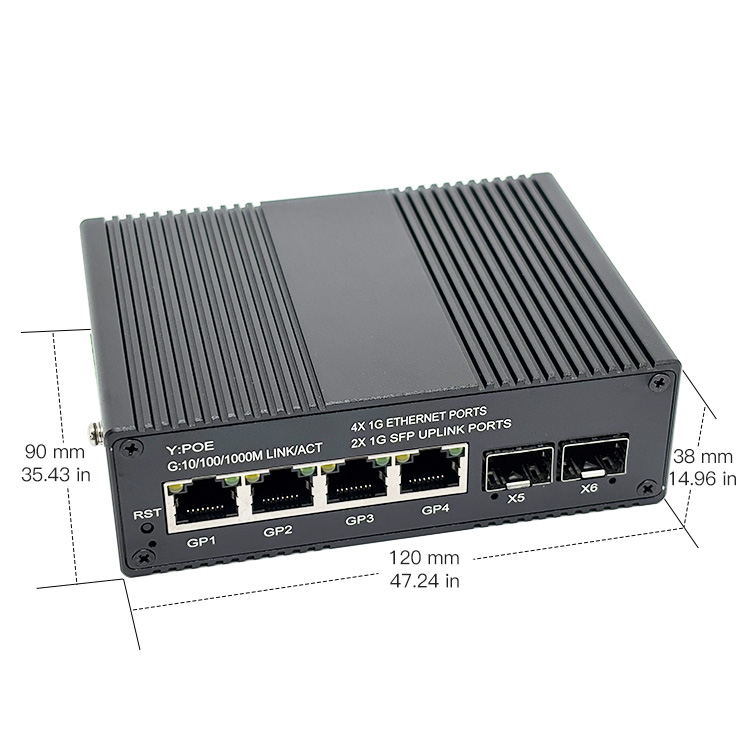
4. Cost Considerations
Initial cost: Solar PoE switches have higher upfront expenses due to panels and batteries. DC PoE switches are cheaper initially. Long-term: Solar systems offer zero electricity costs, while DC switches incur ongoing power bills. Total cost of ownership depends on location and usage. FICOTEK, with its own factory and complete R&D chain from optical components to industrial switches, offers competitive pricing and a one-year replacement, three-year warranty, and lifetime technical support, reducing total cost for customers.
5. Environmental Impact
Solar PoE switches are green and sustainable, reducing carbon footprint. DC PoE switches depend on grid electricity, which may come from non-renewable sources. For eco-conscious projects, solar solutions are preferable. FICOTEK adheres to an efficient innovation and people-oriented philosophy, producing environmentally friendly products with low power consumption.
6. FICOTEK’s Role in PoE Switch Innovation
Shenzhen Ficotek Photonics Co., Ltd. (FICOTEK) is a leading manufacturer with deep expertise in optoelectronics and optical communication. The company has invention patents and utility model patents, ensuring cutting-edge designs. Their industrial switches feature lightweight network management, lower power consumption, and ruggedness. FICOTEK provides customized products, OEM/ODM services, and comprehensive after-sales support. Whether for solar or DC PoE applications, FICOTEK delivers reliable solutions backed by rigorous reliability verification.
Conclusion
Choosing between a Solar PoE switch and a DC PoE switch hinges on power availability, installation environment, and cost constraints. Solar switches offer autonomy and eco-friendliness, while DC switches provide simplicity and consistency. FICOTEK’s versatile product line bridges the gap, offering both types with industrial-grade features. For expert guidance, customers can consult FICOTEK’s experienced team, which has rich experience in enterprise management and product development.
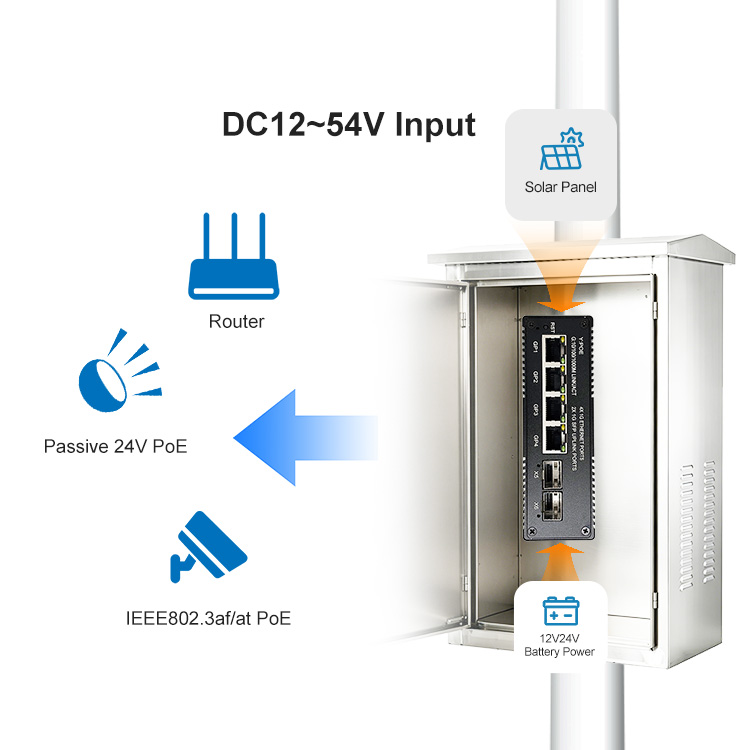
- Key Takeaway: Solar PoE switches are best for off-grid outdoor use; DC PoE switches suit grid-connected industrial settings.
- FICOTEK provides both solutions with strong technical support and customization.