

Summary
This article compares Solar POE Switches and Solar Inverter + PoE Injector setups for remote power and data applications. A Solar POE Switch integrates solar charge control, battery management, and PoE switching into one unit, offering higher efficiency (minimizing power conversion losses) and simpler installation (fewer components and connections). It is ideal for small to medium deployments (4-16 PoE devices) in extreme environments, especially when all loads are powered via Ethernet. Products from FICOTEK exemplify this integrated approach with industrial-grade temperature resistance, lightning protection, and comprehensive network management features like VLAN, QoS, RSTP, and SNMP. Their factory ensures rigorous reliability testing and offers OEM/ODM services with a “one-year replacement, three-year warranty, lifetime technical support” policy.
In contrast, the Solar Inverter + PoE Injector setup separates power conversion and network distribution, providing greater flexibility for large-scale or heterogeneous systems requiring AC power. However, it involves lower efficiency due to multiple conversions, higher complexity, and potentially higher total cost of ownership when factoring in additional components and installation. It suits projects with gradual expansion or mixed loads.
Key decision factors include efficiency (integrated wins), installation ease (integrated wins), scalability (modular wins), reliability (integrated win due to fewer failure points), cost (integrated often lower TCO for small projects), and maintenance (single vendor support easier). Real-world examples illustrate that for remote oil wells or security cameras, integrated solutions reduce downtime, while for wind farms with diverse equipment, modular setups offer adaptability. Ultimately, the choice hinges on project scale, load types, and environmental conditions. FICOTEK’s vertical integration—from optical components to industrial switches—ensures quality and innovation, making them a reliable partner for either approach.
Solar POE Switch vs Solar Inverter + PoE Injector: Which Setup Is Better for Remote Power and Data?
In the rapidly evolving landscape of renewable energy and smart surveillance, the demand for reliable, off-grid power and data transmission solutions has never been higher. Two prominent setups have emerged for powering remote devices like IP cameras, access points, and sensors: the Solar POE Switch and the combination of a Solar Inverter with a PoE Injector. Each approach has its own advantages and trade-offs, and choosing the right one depends on factors such as system complexity, scalability, cost, and environmental conditions. This article provides a thorough comparison to help system integrators, engineers, and end-users make an informed decision.
To set the stage, it’s essential to understand the core components. A Solar POE Switch integrates a solar charge controller, battery management, and Power over Ethernet (PoE) switching into a single unit. It converts solar panel energy into usable power for both the switch and connected devices, all while managing battery charging and discharging. On the other hand, the solar inverter + PoE injector approach separates these functions: the solar inverter handles DC-AC conversion (or direct DC management) and battery control, while a standalone PoE injector adds power to Ethernet cables for connected devices. Both systems aim to provide uninterrupted operation in remote locations.
FICOTEK, a leading manufacturer in the field, offers a range of industrial-grade networking products that epitomize the integrated approach. Shenzhen Ficotek Photonics Co., Ltd. adheres to the business philosophy of efficient innovation and people-oriented. Among the company’s management personnel, there are rich experience in enterprise management and management talents who have been engaged in the development and market expansion of optoelectronic and optical communication products for many years. And they have absorbed a group of experienced production and process technology engineers to provide strong technical support for the company’s products. Ficotek has its own factory, and with the continuous growth of factory size and number of employees, the factory’s production capacity continues to increase. They can provide customized products with independent intellectual property rights according to customer requirements. They can provide OEM and ODM services for their customers, and all customers can enjoy after-sales service of “one-year replacement, three-year warranty, and lifetime technical support”.
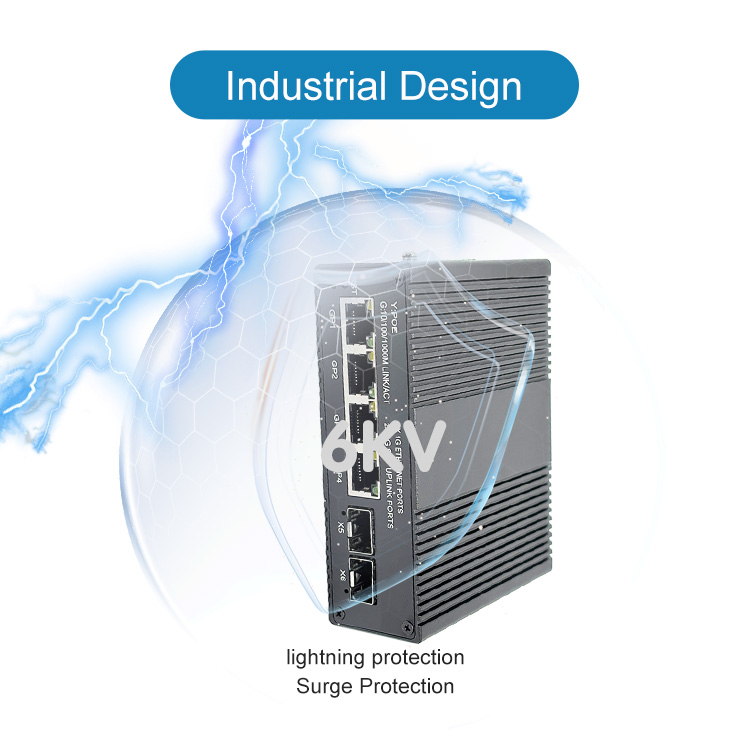
Their products feature industrial-grade temperature resistance and outdoor lightning protection capabilities. With lightweight network management, they offer VLAN, QoS, RSTP, ERPS, SNMP, POE control, link aggregation, and lower power consumption. They are widely used in industries such as petroleum, energy storage, high-speed rail, wind power generation, and security. This background underscores the viability of integrated solutions in harsh environments.
undefined
Comparison Criteria
To evaluate which setup is better, we consider several key criteria: efficiency and power management, complexity and installation, scalability and flexibility, reliability and robustness, cost-effectiveness, and maintenance and support. Each criterion will be examined in depth.
1. Efficiency and Power Management
The Solar POE Switch typically boasts higher overall efficiency because it eliminates multiple conversion stages. Solar panels generate DC power; a solar POE switch directly uses this DC to power the switch and PoE outputs, with only one conversion to regulated voltage for the battery. In contrast, the solar inverter + PoE injector path often involves converting DC to AC (inverter) and then back to DC for the PoE injector and devices, introducing losses of 10-30%. However, some modern solar inverters are DC-coupled and can power DC loads directly, reducing losses. Still, the integrated design of a solar POE switch allows for optimized power tracking and load management specific to PoE devices.
For example, Ficotek’s industrial switches incorporate advanced power management features like PoE control and link aggregation, enabling administrators to prioritize power allocation to critical devices. This level of control is harder to achieve with separate components unless a sophisticated controller is added.
2. Complexity and Installation
Installation simplicity favors the Solar POE Switch. With a single unit to mount, wire, and configure, fewer connections are required, reducing potential points of failure. The integrator only needs to connect solar panels, the battery, and network cables. In contrast, the solar inverter + PoE injector setup involves multiple devices: inverter, battery, charge controller (often integrated in inverter), PoE injector, and a separate switch if needed. This increases wiring complexity, requires more enclosure space, and may need a professional electrician for AC wiring.
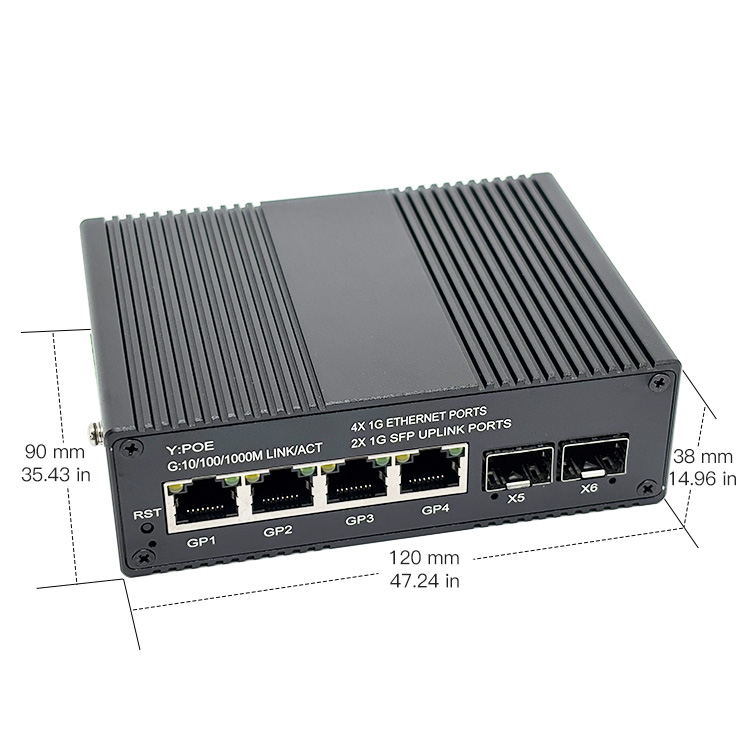
Moreover, integrated solutions often come with pre-configured management interfaces. Ficotek’s switches, for instance, support lightweight network management, allowing users to set up VLANs, QoS, and SNMP without extensive training. Separate components may require coordinating settings across different devices, which can be error-prone.
3. Scalability and Flexibility
When it comes to scalability, the modular approach of solar inverter + PoE injector may offer more flexibility. If a system needs to expand, one can add more solar panels, upgrade the inverter, or install additional PoE injectors without replacing the entire unit. This can be beneficial for large installations where gradual expansion is planned.
However, solar POE switches are also available in various port counts and power budgets. Ficotek, with its complete R&D and production capabilities from optical components to industrial switches, can provide customized products according to different customer needs. They have invention patents and utility model patents, ensuring innovative designs that can scale. For typical remote surveillance projects with 4-16 cameras, an integrated switch often meets requirements and simplifies inventory.
4. Reliability and Robustness
Both setups can achieve high reliability, but integrated designs reduce interconnections. Fewer cables and connectors mean fewer failure points. Additionally, industrial-grade components like those from Ficotek are designed for extreme temperatures (from -40°C to 75°C) and outdoor lightning protection. Their products undergo rigorous reliability verification before launch. The separate approach may introduce vulnerabilities if components are not matched properly, such as a consumer-grade PoE injector failing in heat or humidity.
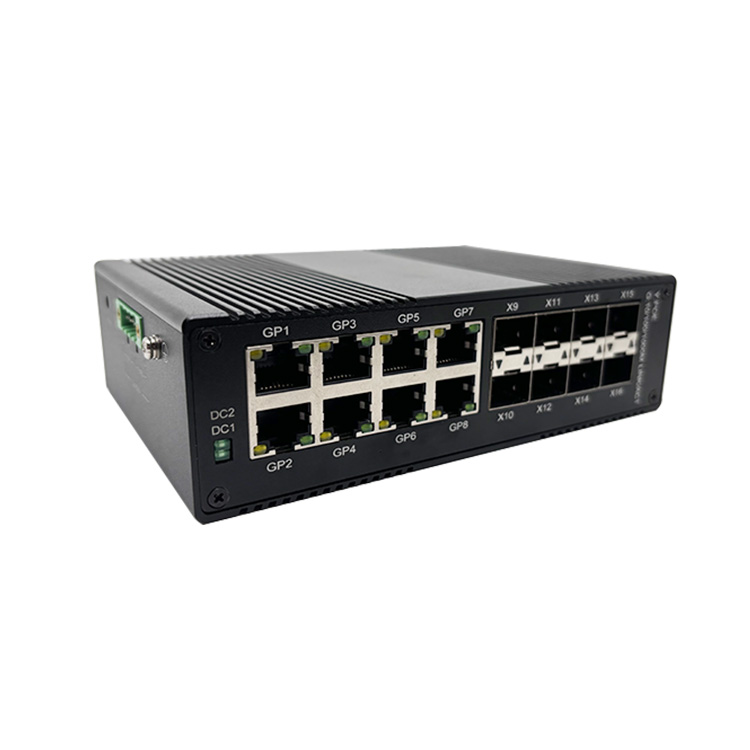
Ficotek’s factory has complete R&D and production equipment and product testing instruments, with capabilities across the entire industry chain from optical components to TOSA ROSA BOSA, to Optical Modules, to Media Converter, to Industrial-grade Switches. This vertical integration ensures quality control and consistent performance.
5. Cost-Effectiveness
Upfront costs: Solar POE switches often have a higher initial price due to the integration of multiple functions. However, when considering the total cost of ownership (TCO), the integrated system can be cheaper because it eliminates the need for an inverter (typically $200-$500), a separate PoE injector ($50-$200), additional enclosure, and extra wiring. The separate setup may also require a managed switch for network features, adding further cost.
For small to medium projects, the integrated solution usually offers a lower TCO. For very large deployments with existing infrastructure, the modular approach might be more economical if components can be sourced competitively. Ficotek provides OEM and ODM services, allowing customers to get exactly what they need without paying for unnecessary features.
6. Maintenance and Support
With a single vendor for the Solar POE Switch, maintenance is streamlined. Ficotek offers after-sales service of “one-year replacement, three-year warranty, and lifetime technical support”. This means any issue is resolved through one contact. In contrast, a multi-vendor setup requires coordinating between different companies for solar parts, inverter, and PoE components, which can be challenging. Troubleshooting is also simpler with integrated units because logs and monitoring are centralized.
Ficotek’s management personnel have rich experience in enterprise management and optoelectronic product development, providing strong technical support. Their switches feature SNMP and lightweight network management, allowing remote diagnostics.
Real-World Application Scenarios
Consider a remote oil well monitoring site with 8 IP cameras and a wireless bridge. The environment is extreme: desert heat, sandstorms, and unstable grid. A Solar POE Switch from Ficotek, with its industrial-grade temperature resistance and lightning protection, can be deployed in a sealed enclosure near the solar panel. It provides PoE power to cameras and data to the bridge, with built-in battery management. The simplicity ensures high uptime.
Alternatively, a large wind farm with 50+ cameras distributed across a wide area might benefit from a modular approach. Each cluster can have its own solar array and inverter, feeding a centralized PoE switch. The inverter’s AC output can also power other equipment like weather stations. The flexibility of scaling individual clusters outweighs the integration benefits.
Technical Deep Dive: Power Budget and Sizing
To design a system, one must calculate power requirements. Suppose each camera draws 15W (PoE IEEE 802.3af). For 8 cameras, total PoE load is 120W. The Solar POE Switch must supply that plus its own consumption (~15W). So total load 135W. With a solar panel of 300W and a 24V battery bank, the switch’s charge controller will manage. In the separate setup, the inverter must supply the PoE injector (which consumes additional overhead) and the camera power. Typically, the inverter’s efficiency is 90%, so 135W DC becomes 150W AC, then the PoE injector converts back to DC with ~85% efficiency, resulting in 127.5W available for cameras, requiring a larger solar array.
Thus, the integrated solution is more efficient for purely PoE loads. For mixed loads requiring AC, the inverter approach is necessary.
Conclusion
Choosing between a Solar POE Switch and a Solar Inverter + PoE Injector depends on the application: for small to medium installations solely powering PoE devices in harsh environments, the integrated Solar POE Switch offers simplicity, efficiency, and reliability. Ficotek’s products embody this advantage. For large, heterogeneous systems requiring AC power or gradual expansion, the modular approach provides flexibility. In both cases, selecting quality components from reputable vendors like Ficotek ensures long-term performance. Ultimately, understanding the trade-offs in power management, installation, and scalability will guide the optimal choice.