

When comparing solar PoE switches versus traditional PoE switches, the choice hinges on power availability, environmental conditions, and long-term cost goals. Traditional PoE switches rely on AC mains power, are simple to install, and suit indoor or grid-connected outdoor uses with lower upfront costs. Solar PoE switches integrate solar panels and batteries, enabling energy independence for remote or off-grid installations. They excel in harsh environments due to industrial-grade components, lightning protection, and wide temperature tolerance. Companies like Shenzhen Ficotek Photonics (FICOTEK) manufacture both types, with solar models offering MPPT, dynamic power management, and full network management features like VLAN, QoS, RSTP, and SNMP. FICOTEK’s products undergo rigorous testing and come with warranties up to lifetime technical support. Application examples include remote surveillance, telecom backhaul, smart agriculture, and energy sector monitoring. While solar switches involve higher initial investment, they reduce operating costs and carbon footprint. Traditional switches remain cost-effective for urban deployments. Ultimately, selecting the right switch requires assessing site location, power reliability, environmental severity, and budget. FICOTEK provides OEM/ODM customization and patent-protected innovations to meet diverse needs. For sustainable, long-term performance, solar PoE switches are the future; for immediate, low-complexity needs, traditional PoE switches still deliver. This article offers a comprehensive guide to help network planners make informed decisions.
Power over Ethernet (PoE) switches have become essential in modern networking, enabling both data and power transmission over a single cable. Among the various types, solar PoE switches and traditional PoE switches stand out for different applications. This article delves into the key differences, advantages, and use cases to help you decide which solution best fits your needs.
Understanding Traditional PoE Switches
Traditional PoE switches are standard network switches that deliver power to connected devices such as IP cameras, wireless access points, and VoIP phones via Ethernet cables. They rely on a stable AC mains power supply and are designed for indoor or controlled outdoor environments. These switches offer a wide range of port densities, power budgets, and management features like VLAN, QoS, RSTP, and SNMP.
undefined
Typical applications include office networks, enterprise campuses, and commercial security systems. They provide reliable performance when grid power is available and require minimal installation complexity. However, they are limited by their dependence on AC power, making them unsuitable for remote or off-grid locations.
Introducing Solar PoE Switches
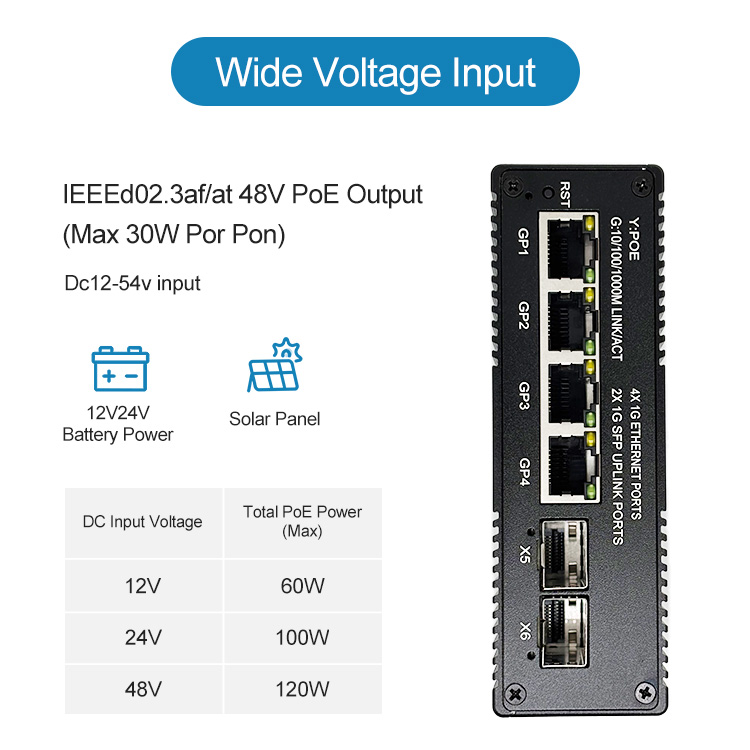
Solar PoE switches integrate a built-in solar charge controller and battery management system, allowing them to operate independently of the power grid. They are designed for outdoor deployments where AC power is unavailable or unreliable. These switches can be powered by solar panels and often include features like MPPT (Maximum Power Point Tracking) for efficient solar energy harvesting.
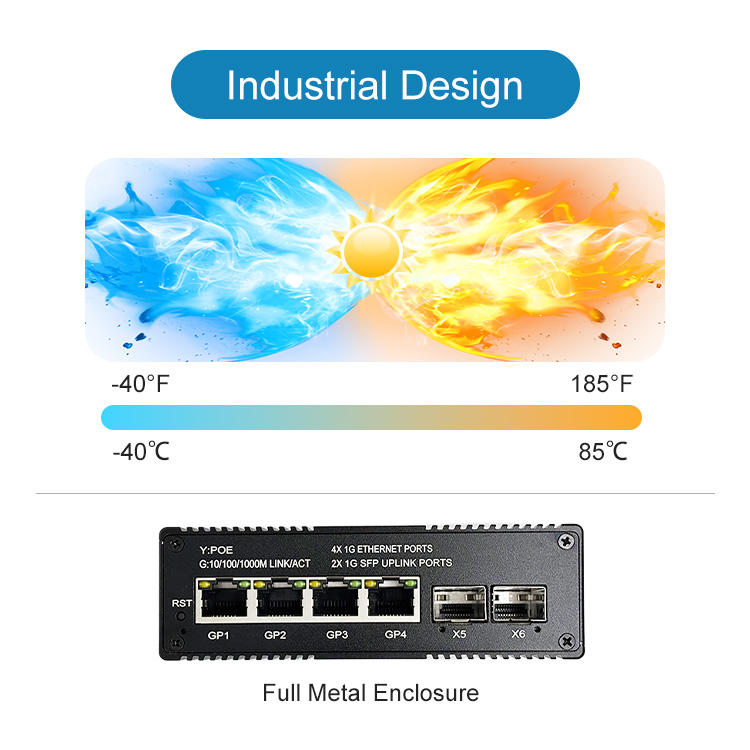
Solar PoE switches retain all the standard networking capabilities of traditional switches, including VLAN, QoS, RSTP, ERPS, and PoE control. They also offer industrial-grade temperature resistance and outdoor lightning protection, making them ideal for harsh environments. Companies like Shenzhen Ficotek Photonics Co., Ltd (FICOTEK) specialize in such robust solutions.
Key Differences Between Solar and Traditional PoE Switches
| Feature | Solar PoE Switch | Traditional PoE Switch |
|---|---|---|
| Power Source | Solar panels + battery backup | AC mains power |
| Deployment Location | Remote, off-grid, outdoor | Indoor or controlled outdoor |
| Environmental Resistance | Industrial temperature, lightning protection | Limited (usually indoor rated) |
| Energy Efficiency | Green energy, low carbon footprint | Standard energy consumption |
| Installation Complexity | Moderate (requires solar panel setup) | Simple (plug into AC outlet) |
| Cost | Higher upfront, lower operating cost | Lower upfront, ongoing electricity cost |
| Management Features | VLAN, QoS, RSTP, ERPS, SNMP, PoE control | Similar (depending on model) |
Detailed Comparison
Power Source and Reliability
Traditional PoE switches provide instant-on power from the grid, but during outages, they cease to function. Solar PoE switches, equipped with batteries, can continue operating for hours or even days depending on sunlight and battery capacity. FICOTEK’s solar PoE switches, for instance, incorporate efficient battery management to ensure uninterrupted service.
Environmental Suitability
Solar PoE switches are built to withstand extreme temperatures, humidity, and lightning strikes, with IP-rated enclosures often included. Traditional switches are not designed for such conditions unless specifically reinforced. FICOTEK’s products feature industrial-grade temperature resistance and outdoor lightning protection, making them suitable for petroleum, energy storage, high-speed rail, wind power generation, and security applications.
Energy Efficiency and Sustainability
Solar PoE switches utilize renewable energy, reducing carbon footprint and operational costs over time. Traditional switches draw from the grid, incurring ongoing electricity expenses. For large-scale deployments, the savings from solar can be significant.
Applications of Solar PoE Switches
- Remote Surveillance: Security cameras in wilderness, border areas, or farmlands.
- Telecommunications: Cellular backhaul in off-grid locations.
- Smart Agriculture: Sensors and actuators in fields.
- Transportation: High-speed rail surveillance and signaling.
- Energy Sector: Monitoring wind farms and solar arrays.
These applications benefit from solar PoE switches’ independence from grid infrastructure. For example, in wind power generation, FICOTEK’s switches provide reliable connectivity for turbine monitoring systems without extending power lines.
Applications of Traditional PoE Switches
- Campus Networks: Connecting access points and IP phones.
- Commercial Buildings: Security cameras and badge readers.
- Hospitality: In-room IP phones and smart TVs.
- Healthcare: Patient monitoring and communication systems.
Where AC power is readily available, traditional PoE switches offer cost-effective and straightforward solutions.
Choosing the Right Solution
Consider the following factors when deciding:
- Location: Off-grid or remote areas favor solar PoE switches.
- Power Availability: If AC power is stable, traditional switches may suffice.
- Environmental Conditions: Harsh environments demand industrial-grade hardware.
- Budget: Solar PoE switches have higher initial costs but lower long-term expenses.
- Scalability: Solar solutions can be deployed where infrastructure is limited.
For projects requiring flexibility and customization, FICOTEK offers OEM and ODM services. Their products come with a one-year replacement, three-year warranty, and lifetime technical support. The company has invention patents and utility model patents, ensuring innovative and reliable solutions.
FICOTEK: A Trusted Manufacturer
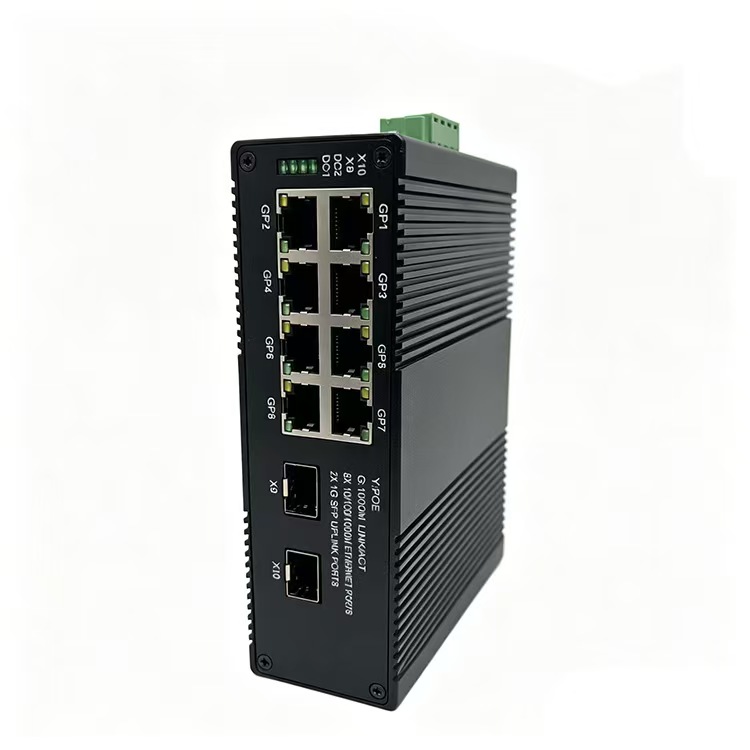
Shenzhen Ficotek Photonics Co., Ltd (FICOTEK) is a leading manufacturer with a complete R&D and production chain from optical components to TOSA/ROSA/BOSA, optical modules, media converters, and industrial-grade switches. Their factory has grown in size and capacity, enabling customized products with independent intellectual property rights. All products undergo rigorous reliability verification before market launch. The company’s business philosophy of efficient innovation and people-oriented is reflected in their team, which includes experienced management and engineers specialized in optoelectronics and optical communications.
FICOTEK’s solar PoE switches incorporate lightweight network management features like VLAN, QoS, RSTP, ERPS, SNMP, PoE control, link aggregation, and lower power consumption. They are widely used in industries such as petroleum, energy storage, high-speed rail, wind power generation, and security. The company welcomes partners from all walks of life to visit and provide guidance.
Product Examples
While specific models vary, typical solar PoE switches from FICOTEK include:
- 8-port solar PoE switch with 120W power budget
- 16-port with built-in MPPT controller
- 4-port with compact design for pole-mounting
These support wide temperature ranges (-40°C to 75°C) and surge protection up to 6kV.
Technical Considerations
Power Budget and PoE Standards
Solar PoE switches must balance power output with solar generation. Traditional switches have fixed power budgets, while solar switches often offer dynamic power management. Both support IEEE 802.3af/at/bt standards. FICOTEK’s switches ensure efficient power delivery even in varying sunlight conditions.
Network Management
Both types offer managed and unmanaged variants. Managed switches provide VLAN for network segmentation, QoS for traffic prioritization, RSTP/ERPS for redundancy, and SNMP for monitoring. Solar PoE switches may include additional energy monitoring features. FICOTEK’s switches include lightweight network management for easy deployment.
Installation and Maintenance
Solar PoE switch installation requires solar panel positioning and battery setup. Traditional switches simply plug into an AC outlet. Maintenance for solar includes battery checks and panel cleaning, while traditional switches need minimal upkeep. FICOTEK provides comprehensive technical support and lifetime warranties to minimize maintenance burdens.
Cost Analysis
Initial investment for solar PoE switches is higher due to solar panels, batteries, and charge controllers. However, long-term savings from eliminated electricity costs and reduced grid dependency can offset this. For example, a remote camera site might save thousands over five years. Traditional switches have lower upfront costs but ongoing energy bills. For larger deployments, total cost of ownership (TCO) must be calculated. FICOTEK offers competitive pricing with their own factory, reducing intermediate costs.
Future Trends
As renewable energy adoption grows, solar PoE switches are becoming more common. Advances in solar efficiency and battery technology will further enhance their viability. Traditional PoE switches will continue to dominate urban areas, but hybrid solutions may emerge. FICOTEK is at the forefront, with continuous innovation in photovoltaic integration and network management.
Conclusion
Both solar PoE switches and traditional PoE switches have their place. Solar PoE switches are best for off-grid, remote, or environmentally sensitive deployments where sustainability and autonomy are priorities. Traditional PoE switches are ideal for locations with reliable AC power and indoor environments. FICOTEK’s product line includes both types, with a focus on industrial-grade reliability and customer-centric services. By understanding your specific requirements, you can select the right switch to power your network efficiently.
For personalized advice, contact FICOTEK’s team. Their expertise in optoelectronics and network solutions ensures you get the best match for your project. Remember, the right choice today can save costs and improve performance tomorrow.
About FICOTEK: Shenzhen Ficotek Photonics Co., Ltd. Adheres to the business philosophy of efficient innovation and people-oriented. With experienced management and engineers, they provide customized OEM/ODM services with after-sales support including one-year replacement, three-year warranty, and lifetime technical support. Their products feature industrial-grade temperature resistance, outdoor lightning protection, and lightweight network management. They have invention patents and utility model patents, ensuring cutting-edge solutions for petroleum, energy storage, high-speed rail, wind power generation, and security sectors.