

The Solar POE Switch with SFP port is a specialized networking device that combines solar power, Power over Ethernet (POE), and fiber optic uplink capabilities, making it ideal for remote and outdoor installations where traditional power and network infrastructure are unavailable. This article explores when fiber uplink becomes necessary, highlighting key scenarios such as long-distance connectivity beyond 100 meters, immunity to electromagnetic interference (EMI) in industrial environments, high bandwidth requirements, electrical isolation for safety, and scalable network design. The switch supports industrial-grade features like temperature resistance, lightning protection, and lightweight network management (VLAN, QoS, RSTP, ERPS, SNMP, POE control, link aggregation). Shenzhen Ficotek Photonics Co., Ltd (FICOTEK) is a leading manufacturer offering customized, OEM/ODM services with one-year replacement, three-year warranty, and lifetime technical support. Their products undergo rigorous reliability verification and are used in industries such as petroleum, energy storage, high-speed rail, wind power, and security. The article also covers deployment considerations including solar power budgeting, fiber type selection, environmental protection, and network management. Ultimately, understanding the need for fiber uplink ensures robust and future-proof network designs for challenging environments.
In the rapidly evolving landscape of industrial networking, the demand for robust, reliable, and power-efficient solutions has never been greater. One such innovation that has gained significant traction is the Solar Power over Ethernet (POE) Switch with SFP (Small Form-factor Pluggable) port. This device combines the benefits of solar energy harvesting, Power over Ethernet, and fiber optic uplink capabilities, offering a versatile solution for remote and outdoor installations. But when exactly is a fiber uplink necessary? This article delves into the intricacies of solar POE switches with SFP ports, exploring their applications, advantages, and the scenarios where fiber uplink becomes indispensable.
Understanding Solar POE Switch with SFP Port
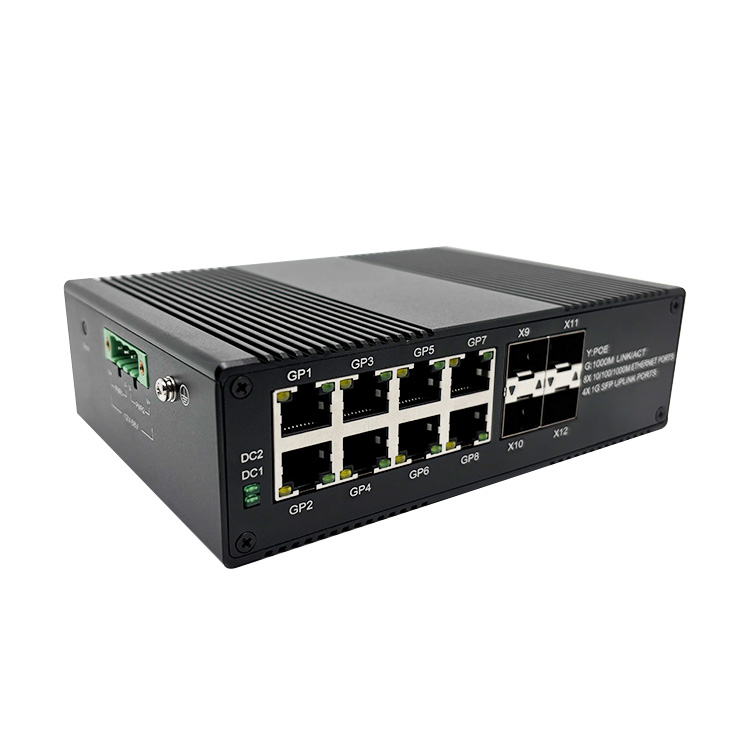
A Solar POE Switch is a network switch that can be powered by solar panels, making it ideal for off-grid or remote locations where traditional power sources are unavailable. The switch includes POE functionality, allowing it to deliver both data and power to connected devices such as IP cameras, wireless access points, and sensors over a single Ethernet cable. The addition of an SFP port provides the option for fiber optic connectivity, enabling high-bandwidth, long-distance data transmission immune to electromagnetic interference.
Key Features of Solar POE Switch with SFP Port
- Industrial-Grade Design: Built to withstand harsh environments, these switches typically feature industrial-grade temperature resistance and outdoor lightning protection capabilities. As per Shenzhen Ficotek Photonics Co., Ltd (FICOTEK), their products are designed for extreme conditions, ensuring reliable operation in industries such as petroleum, energy storage, high-speed rail, wind power generation, and security.
- Solar Power Compatibility: The switch can be directly connected to solar panels and a charge controller, enabling autonomous operation in remote areas without grid power.
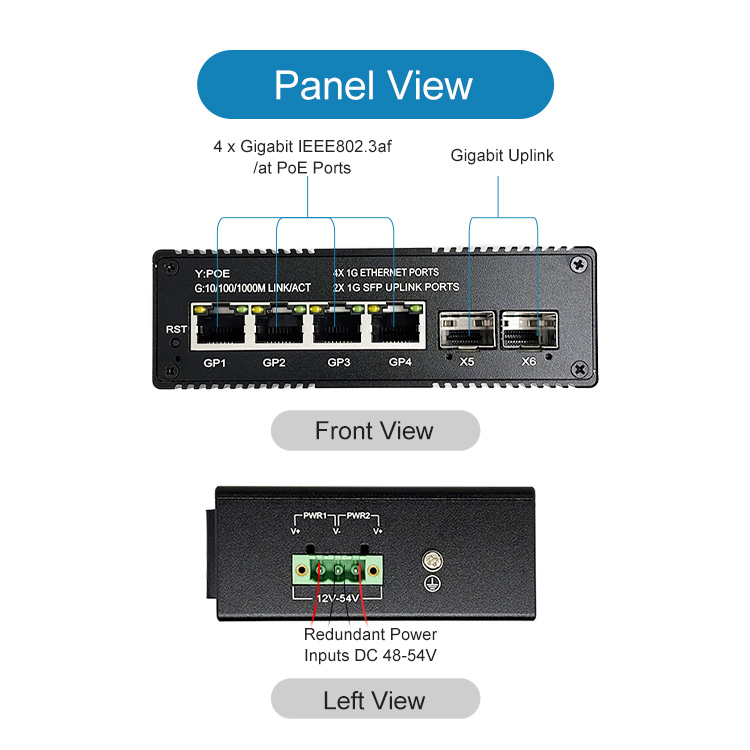
- POE Capability: Supports IEEE 802.3af/at standards, delivering up to 30W per port (or more with POE+), allowing powering of devices like PTZ cameras and wireless bridges.
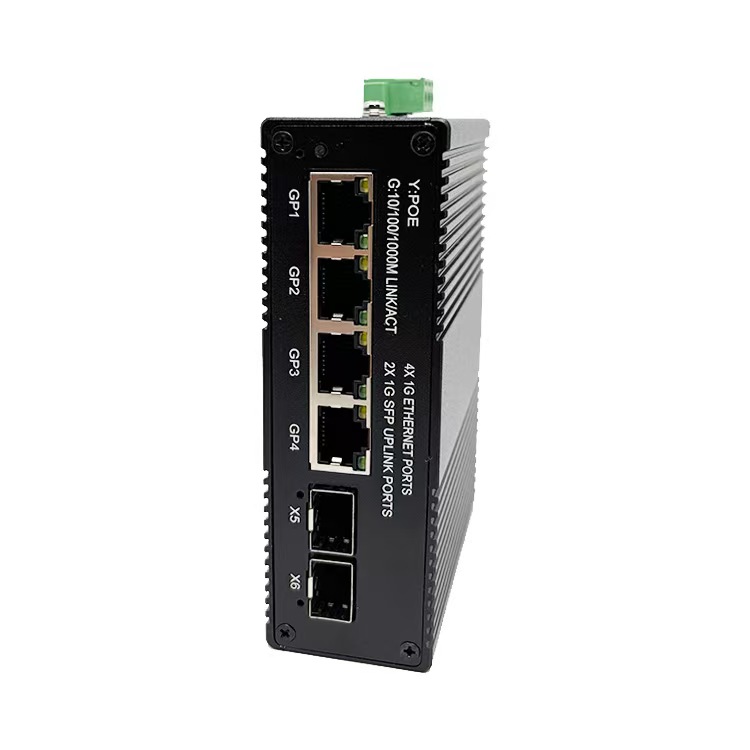
- SFP Port for Fiber Uplink: The SFP slot accepts fiber optic modules (e.g., 1000Base-SX, 1000Base-LX) for uplink to a central network or backbone. This is crucial when distances exceed 100 meters (the limit of copper Ethernet).
- Lightweight Network Management: Despite being solar-powered, these switches often include advanced management features such as VLAN, QoS, RSTP, ERPS, SNMP, POE control, link aggregation, and lower power consumption, as highlighted by FICOTEK’s product lineup.
When Do You Need Fiber Uplink?
Fiber uplink is not always necessary, but it becomes critical under specific conditions. The decision to use fiber versus copper depends on distance, bandwidth requirements, environmental factors, and network topology. Below are the primary scenarios where fiber uplink is recommended:
1. Long Distance Connectivity
The most obvious reason to use fiber is distance. Standard Ethernet over twisted-pair copper (Cat5e/6) is limited to 100 meters (328 feet). Beyond that, signal degradation occurs. Fiber optic cables can transmit data over much longer distances—single-mode fiber can reach up to 10 km or more without repeaters, while multi-mode fiber typically covers up to 550 meters for 10GbE. For a solar POE switch installed in a remote location, the fiber uplink port allows connection to a central office or network backbone that may be kilometers away.
undefined
Example Application:
Consider a solar-powered surveillance system monitoring a pipeline in a desert. The closest network hub is 2 km away. Using the SFP port with a single-mode fiber module, the switch can maintain a high-speed link to the hub, ensuring real-time video transmission without signal loss.
2. Immunity to Electromagnetic Interference (EMI)
Fiber optics are immune to EMI, making them ideal for industrial environments with heavy machinery, high-voltage power lines, or other sources of electromagnetic noise. Copper cables can act as antennas, picking up interference that degrades signal quality. In applications such as wind power generation or high-speed rail, where electrical noise is prevalent, fiber ensures reliable data transmission.
3. High Bandwidth Requirements
While modern copper Ethernet can support Gigabit speeds (and up to 10GbE for short distances), fiber offers higher bandwidth capacity and future-proofing. For instance, a solar POE switch deployed in a smart agriculture setup may need to aggregate data from multiple 4K cameras and sensors. The fiber uplink can handle the aggregated traffic without bottlenecking, especially when multiple switches are daisy-chained.
4. Need for Electrical Isolation
Fiber provides galvanic isolation, meaning no electrical connection between the two ends. This is crucial in environments where grounding differences could cause ground loops or where lightning protection is a concern. In outdoor solar deployments, lightning strikes can induce surges in copper cables. Fiber eliminates this risk, as light pulses are not conductive. FICOTEK’s switches come with outdoor lightning protection capabilities, but using fiber adds an extra layer of security.
5. Scalability and Network Design
In large-scale installations, fiber uplinks allow for a hierarchical network design. A solar POE switch can serve as an access switch, connecting to a distribution switch via fiber. This reduces the number of intermediary switches and simplifies management. With features like ERPS (Ethernet Ring Protection Switching), the network can achieve fast recovery from link failures.
Applications of Solar POE Switch with SFP Port
These switches find applications in diverse fields where conventional power and network infrastructure are impractical. Some notable examples include:
- Oil and Gas Pipelines: Monitoring pumps, valves, and leaks along remote pipelines. Solar-powered switches with fiber uplink connect sensors to a central control room.
- Wind Farms: Each turbine can be equipped with a solar POE switch to power cameras and sensors, using fiber for communication between turbines and substations.
- Smart Agriculture: Monitoring soil moisture, weather stations, and irrigation systems in remote fields.
- Perimeter Security: Solar-powered cameras along fences or borders, with fiber backbone for data transmission to security centers.
- Transportation: Highway monitoring, toll plazas, and railway signaling in areas without grid power.
Advantages of FICOTEK Solar POE Switches
Shenzhen Ficotek Photonics Co., Ltd (FICOTEK) has established itself as a reliable manufacturer of industrial networking equipment. The company adheres to a business philosophy of efficient innovation and people-oriented management, boasting a team with rich experience in optoelectronic and optical communication products. Their factory in Shenzhen continues to grow, increasing production capacity to meet global demand.
Customization and Services
FICOTEK offers customized products with independent intellectual property rights, including OEM and ODM services. They provide after-sales service with one-year replacement, three-year warranty, and lifetime technical support. This commitment ensures that customers receive not only high-quality products but also ongoing support.
Manufacturing Excellence
With complete R&D and production equipment, FICOTEK has full capabilities across the entire industry chain—from optical components (TOSA, ROSA, BOSA) to optical modules, media converters, and industrial-grade switches. Every product undergoes rigorous reliability verification before market release. The company holds invention patents and utility model patents, underscoring their innovation.
Product Features
FICOTEK’s solar POE switches feature industrial-grade temperature resistance, outdoor lightning protection, and lightweight network management. They support VLAN, QoS, RSTP, ERPS, SNMP, POE control, link aggregation, and lower power consumption. These attributes make them suitable for harsh environments in industries like petroleum, energy storage, high-speed rail, wind power, and security.
Considerations for Deployment
When planning a solar POE switch with SFP port installation, several factors must be evaluated:
- Solar Power Budget: Calculate the total power consumption of the switch and its POE devices. Ensure solar panels and batteries are sized appropriately to handle continuous operation, even during cloudy days.
- Fiber Type: Choose between single-mode and multi-mode fiber based on distance and cost. Single-mode is best for long distances (>550m) and higher data rates, but requires more expensive modules.
- Environmental Protection: Use appropriate enclosures (IP rated) and lightning arrestors for outdoor installations. FICOTEK’s switches have built-in protection, but additional surge protection is recommended.
- Network Management: Configure VLANs to segregate traffic, enable RSTP for redundancy, and use SNMP for remote monitoring. The lightweight management features allow for efficient control without heavy overhead.
- Compliance: Ensure the switch meets relevant standards such as IEEE 802.3 for POE and IEEE 802.3z/ab for Gigabit Ethernet over fiber.
Conclusion
The Solar POE Switch with SFP port is a powerful tool for extending network connectivity to remote and off-grid locations. While copper Ethernet may suffice for short distances and benign environments, fiber uplink becomes essential when dealing with long distances, electromagnetic interference, high bandwidth, or electrical isolation requirements. Companies like FICOTEK provide robust, customizable solutions that leverage solar energy and fiber optics to meet the demands of modern industrial applications. By understanding when and how to use fiber uplink, network engineers can design reliable, scalable, and future-proof systems that operate seamlessly in the harshest conditions.
For more information about FICOTEK’s products, including their solar POE switches and other industrial networking gear, visit their website or contact their sales team. With a commitment to quality and innovation, FICOTEK is a trusted partner for global industrial networking needs.