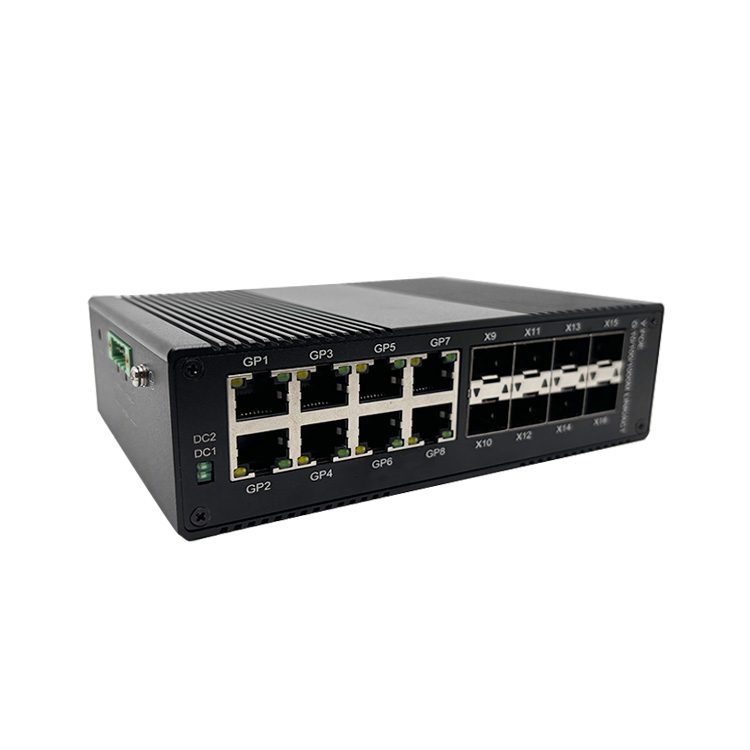
This article provides a comprehensive overview of Solar POE switches, explaining their definition, working principle, and key features. A Solar POE switch integrates solar energy harvesting, battery storage, and Power over Ethernet (POE) to power and connect devices in remote locations without grid power. It works through MPPT solar charge controllers that optimize solar panel output, battery management for energy storage, and POE injection that delivers both data and power over Ethernet cables. The switch intelligently prioritizes power to critical devices during low sunlight. The article highlights features such as industrial-grade temperature resistance (-40°C to 75°C), outdoor lightning protection, lightweight network management (VLAN, QoS, RSTP, ERPS, SNMP, POE control, link aggregation), and low power consumption. Applications span petroleum, energy storage, high-speed rail, wind power generation, and security. Shenzhen Ficotek Photonics Co., Ltd (FICOTEK) is introduced as a manufacturer offering customized products with independent intellectual property, OEM/ODM services, and complete industry chain capabilities from optical components to industrial switches. FICOTEK’s products undergo rigorous reliability verification and are backed by a one-year replacement, three-year warranty, and lifetime technical support. The company holds invention and utility model patents, and its factory ensures scalable production. The summary encapsulates the core benefits of solar POE switches for sustainable, off-grid networking and FICOTEK’s role in providing high-quality, customizable solutions.
A Solar POE (Power over Ethernet) switch is a specialized networking device that integrates solar power management with standard POE switching capabilities. It is designed to operate in remote or outdoor environments where traditional grid power is unavailable or unreliable. By combining photovoltaic (solar) energy harvesting, battery storage, and intelligent power distribution, these switches can power IP cameras, wireless access points, sensors, and other IoT devices while maintaining network connectivity. This article explores the technology behind solar POE switches, their working principles, key features, and real-world applications, with insights from Shenzhen Ficotek Photonics Co., Ltd (FICOTEK), a leading manufacturer in optoelectronic and optical communication products.
Understanding Solar POE Switches
A solar POE switch is essentially an industrial-grade Ethernet switch with integrated solar charge controllers, MPPT (Maximum Power Point Tracking) technology, and POE power sourcing equipment (PSE). It converts DC power from solar panels into regulated voltages to charge batteries and simultaneously deliver up to 30W (or higher with POE++) per port to connected devices. The switch manages power prioritization, ensuring critical devices remain operational even during low sunlight. FICOTEK, adhering to the business philosophy of efficient innovation and people-oriented, has developed a range of such switches that feature industrial-grade temperature resistance and outdoor lightning protection capabilities, making them ideal for harsh environments.
undefined
How Does a Solar POE Switch Work?
The operation of a solar POE switch involves three main stages: solar energy harvesting, power storage and management, and POE data+power transmission. First, solar panels capture sunlight and generate DC electricity. An integrated MPPT controller optimizes the panel’s output to maximize energy extraction, especially under varying irradiance. The harvested power is then stored in a battery bank (typically lead-acid or lithium-ion) via a charge controller that prevents overcharging. The switch’s management system monitors battery voltage and load demand. When sufficient battery power is available, the switch injects DC power onto Ethernet cables (using IEEE 802.3af/at/bt standards) while forwarding data packets. If battery levels drop below a threshold, the switch can shut down non-essential POE ports to preserve uptime for critical devices. FICOTEK’s switches employ lightweight network management, supporting VLAN, QoS, RSTP, ERPS, SNMP, POE control, link aggregation, and lower power consumption for efficient operation.
Key Components and Features
Solar POE switches from FICOTEK incorporate several advanced features:
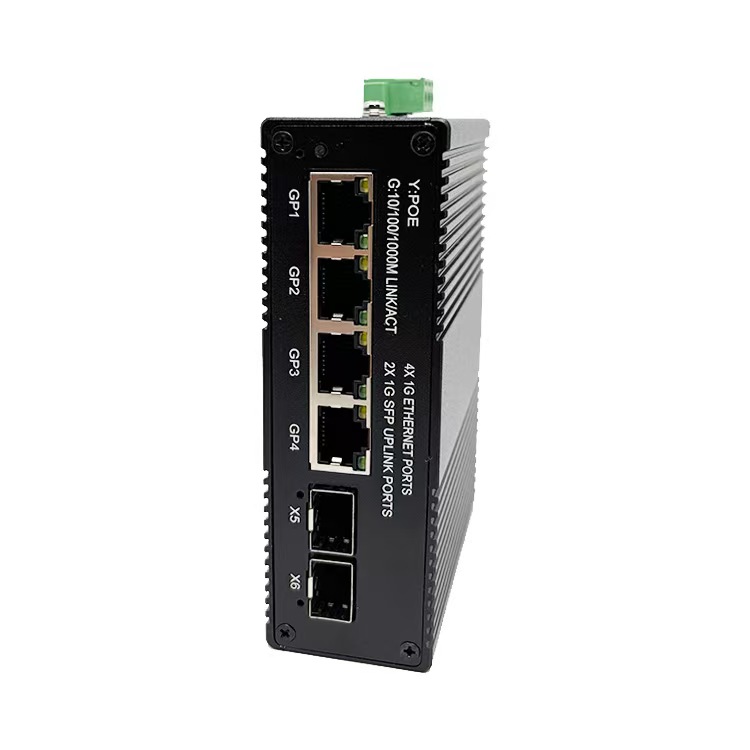
- Industrial-Grade Temperature Resistance: Operate reliably from -40°C to 75°C, suitable for deserts, mountains, and other extreme climates.
- Outdoor Lightning Protection: built-in surge suppression up to 6kV, protecting ports against lightning-induced surges.
- Lightweight Network Management: web or SNMP-based management for VLAN, QoS, RSTP (Rapid Spanning Tree Protocol), ERPS (Ethernet Ring Protection Switching), SNMP, POE scheduling, and link aggregation.
- Lower Power Consumption: optimized circuitry reduces idle power draw, extending battery life.
- Customizable Options: FICOTEK offers OEM and ODM services, providing customized products with independent intellectual property rights according to customer requirements.
Applications of Solar POE Switches
These switches are widely deployed in industries such as petroleum, energy storage, high-speed rail, wind power generation, and security. For example, in oil and gas fields, remote monitoring cameras and sensors can be powered by solar POE switches without trenching for electrical cables. In wind farms, they connect turbines to control networks while withstanding electromagnetic interference. Security installations in remote areas use solar POE switches to power IP cameras and access points. FICOTEK’s products have undergone rigorous reliability verification, and the company holds invention patents and utility model patents for its designs.
FICOTEK’s Manufacturing and Quality Assurance
Shenzhen Ficotek Photonics Co., Ltd. has its own factory, with continuously growing production capacity. The company boasts a team of management personnel with rich experience in enterprise management and market expansion in optoelectronic and optical communication products, along with experienced production and process technology engineers providing strong technical support. FICOTEK offers complete R&D and production equipment and product testing instruments, covering the entire industry chain from optical components (TOSA ROSA BOSA) to optical modules, media converters, and industrial-grade switches. All customers enjoy after-sales service of “one-year replacement, three-year warranty, and lifetime technical support.”
Conclusion
Solar POE switches represent a critical technology for expanding network connectivity to off-grid locations. By combining renewable energy harvesting with robust networking features, they enable reliable IoT deployments in challenging environments. FICOTEK’s commitment to innovation, quality, and customer support makes them a trusted partner for such solutions. Welcome friends from all walks of life to visit and provide guidance.